What Is a PEth Alcohol Test?
PEth stands for Phosphatidylethanol — a group of abnormal phospholipids (fatty molecules) that form on the surface of red blood cells when a person consumes alcohol. Under normal circumstances, PEth does not exist in the human body. Its presence is, therefore, a direct and highly specific indicator that alcohol has been consumed.
Unlike indirect alcohol markers — such as GGT (gamma-glutamyl transferase) or CDT (carbohydrate-deficient transferrin) — PEth is a direct biomarker. This means it is created specifically because of alcohol, not as a secondary effect of liver damage or another medical condition. This makes it one of the most reliable alcohol tests available today.
| 💡 Key Fact: PEth is only produced in the presence of ethanol (alcohol). It cannot be triggered by medications, herbal supplements, or health conditions — making it one of the most specific biomarkers for alcohol consumption available. |
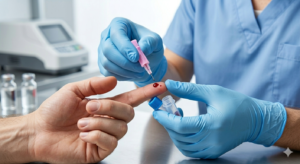
PEth Alcohol Test is performed on a blood sample — usually a simple “dry blood spot” (DBS) collection, which only requires a few drops of blood from a finger-prick. This makes the process far less invasive than a traditional venous blood draw.
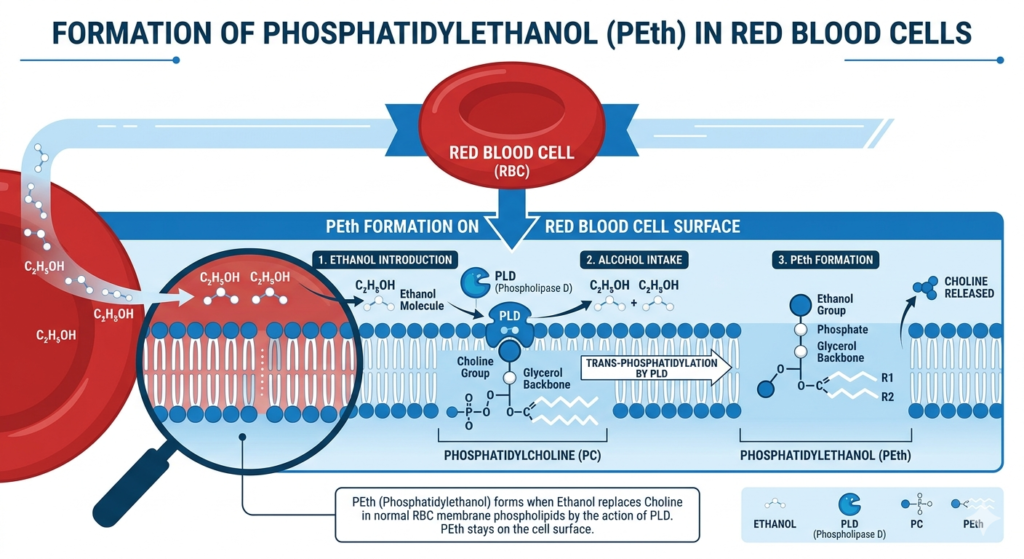
2. How Does PEth Testing Work? The Science Explained
To understand why PEth Alcohol Test is such a powerful alcohol test, it helps to understand a little biology.
When you drink alcohol (ethanol), it enters your bloodstream and interacts with the membranes of your red blood cells. Normally, the enzyme phospholipase D converts a membrane phospholipid called phosphatidylcholine into another compound. However, when ethanol is present, the enzyme mistakenly uses it to create phosphatidylethanol — PEth — instead.
The more you drink, the more PEth is produced. PEth then incorporates itself into the red blood cell membrane, where it remains for up to 28 days as the red blood cells continue their natural lifespan.
Why This Matters
Because PEth is built directly into red blood cells — which live for approximately 28 days — the test provides a reliable retrospective window into a person’s drinking over the past four weeks. It doesn’t just tell you if someone drank recently; it tells you how much and how consistently.
Different PEth analogs (variants of the molecule) exist, but laboratories typically measure 16:0/18:1 PEth, as this is the most abundant and most reliably associated with alcohol consumption.
3. What Can the PEth Test Detect?
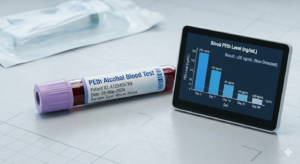
One of the most important advantages of PEth Alcohol Test is its ability to distinguish between different levels of alcohol consumption. Results are typically categorized into the following tiers:
| PEth Level (ng/mL) | Interpretation | What It Suggests |
| < 20 ng/mL | Negative / Abstinence | No significant alcohol consumption detected |
| 20–200 ng/mL | Low to Moderate Consumption | Social or occasional drinking likely |
| 200–500 ng/mL | Moderate to Heavy Drinking | Regular drinking above recommended limits |
| > 500 ng/mL | Heavy / Chronic Consumption | Consistent heavy drinking or alcohol dependence |
| ⚠️ Important: PEth Alcohol Test levels should always be interpreted by a qualified professional in context. Factors like body weight, metabolism, and frequency of drinking — not just quantity — can all influence results. |
🧪 PEth Alcohol Test Estimator
Phosphatidylethanol (PEth) is a direct alcohol biomarker. Estimate your PEth level based on drinking pattern.
📈 Estimated PEth (ng/mL)
PEth Detection Window: How Far Back Does It Go?
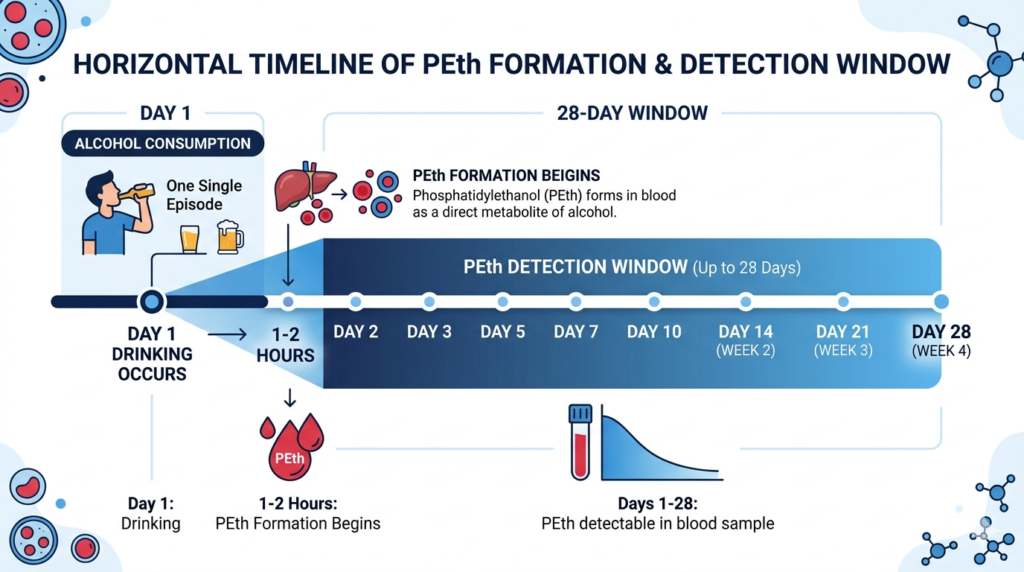
The PEth Alcohol Test has a detection window of approximately 3 to 4 weeks (21–28 days) following alcohol consumption. This is significantly longer than breathalyzer tests (hours), urine EtG tests (3–5 days), or a standard blood alcohol concentration (BAC) test (hours).
Detection Timeline at a Glance
- PEth begins forming within 1–2 hours of the first drink
- Levels peak within 24–48 hours of heavy consumption
- The test can detect drinking that occurred up to 28 days prior to sample collection
- After complete abstinence, PEth Alcohol Test levels typically return to baseline within 2–4 weeks
This extended window is what makes PEth so valuable for monitoring programs, legal proceedings, and clinical assessments where a longer history of drinking behavior is relevant.
The PEth Testing Process: Step by Step
One reason PEth testing has grown in popularity is how simple the collection process is. Here’s what to expect:
- Identity Verification: Before any sample is collected, the individual’s identity is confirmed using official photo ID. This is especially important in legal and compliance contexts.
- Sample Collection: A trained phlebotomist or sample collector obtains a small blood sample. Most modern PEth tests use a ‘dry blood spot’ (DBS) method — a finger prick that deposits a few drops of blood onto a specialized card. This is nearly painless and quick.
- Chain of Custody: The sample is sealed, documented, and tracked from collection to laboratory analysis. This chain of custody process is critical in legal cases to ensure the integrity of results.
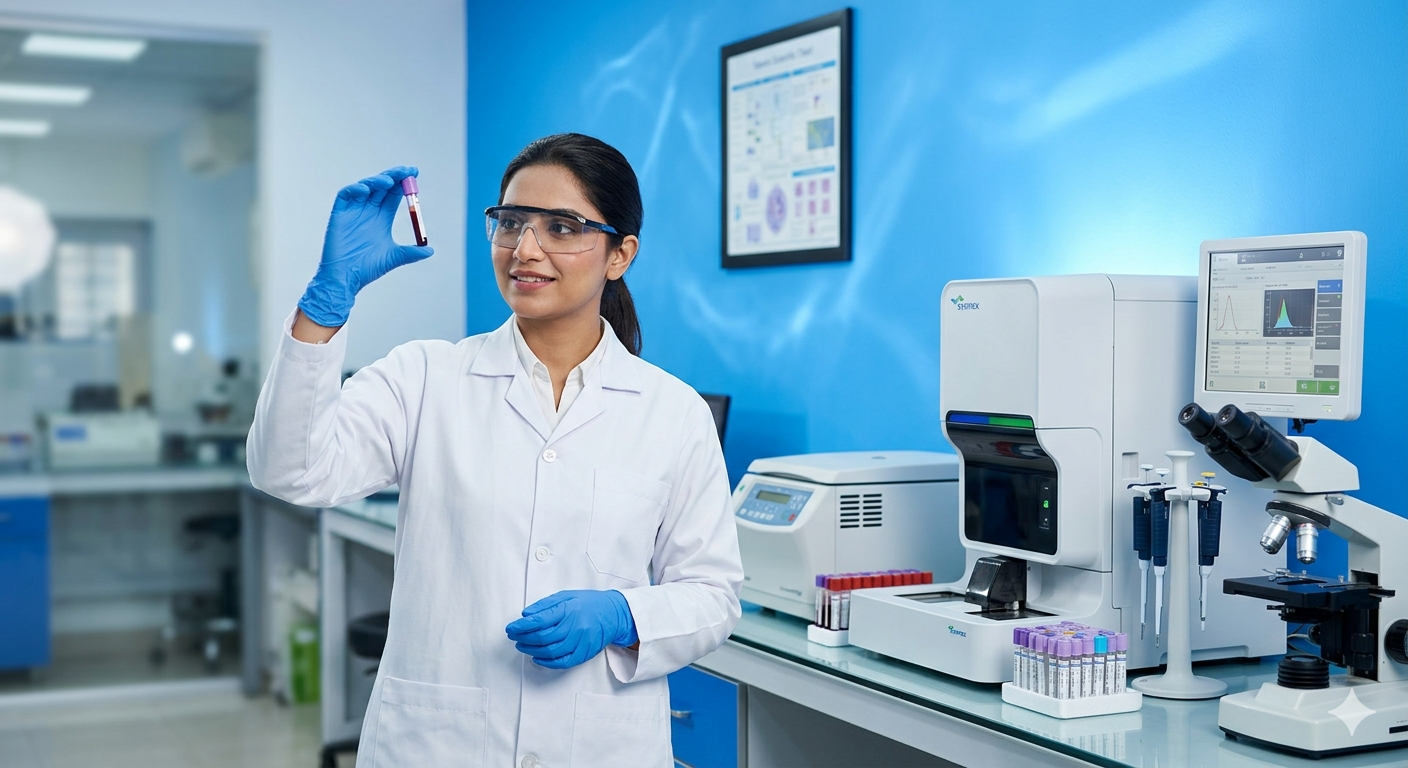
- Laboratory Analysis: The sample is analyzed using LC-MS/MS (liquid chromatography-tandem mass spectrometry) — the gold-standard analytical technique that ensures highly accurate and precise quantification of PEth.
- Results Reporting: Results are typically available within 3–7 working days, depending on the laboratory. A qualified expert can provide a written report suitable for court or clinical use.
| 💡 No preparation is needed before a PEth test. You do not need to fast, avoid any specific foods, or stop taking medications. Alcohol-based hand sanitizers and mouthwashes will not affect your PEth results. |
How to Read PEth Alcohol Test Results
Understanding your PEth result requires more than just looking at a number. Here are the key factors that qualified experts consider when interpreting results:
Quantitative vs. Qualitative Results
PEth testing is quantitative — meaning it gives you an actual concentration level (e.g., 148 ng/mL), not just a simple positive/negative. This is a major advantage, as it allows professionals to assess the degree of alcohol use, not just its presence.
Factors That Affect Interpretation
- Body Mass Index (BMI): Higher BMI can dilute PEth concentrations slightly
- Drinking Pattern: 10 drinks in one night produces higher PEth than 10 drinks spread across a week
- Individual Metabolism: Some individuals metabolize alcohol — and therefore PEth — faster than others
- Combination with Other Biomarkers: PEth results are most informative when combined with other tests such as hair alcohol testing (EtG/EtPa), CDT, or GGT
Because of these variables, PEth results should never be interpreted in isolation by a non-specialist. A toxicologist or forensic scientist can contextualize the number within a full clinical picture.
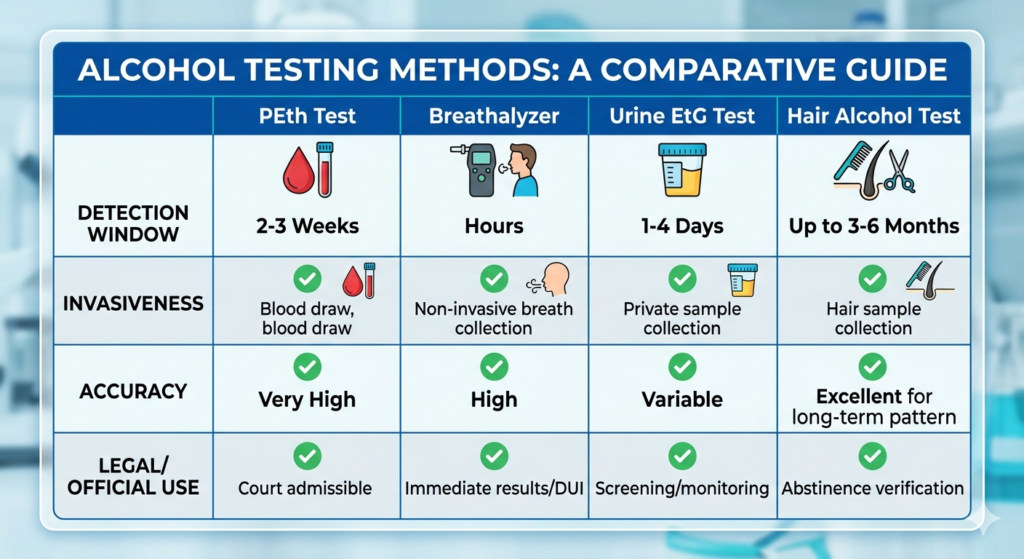
PEth vs. Other Alcohol Tests: Which Is Better?
| Test Type | PEth (Blood) | Breathalyzer | Urine EtG | Hair Alcohol |
| Detection Window | Up to 28 days | 1–12 hours | 3–5 days | Up to 12 months |
| Invasiveness | Low (finger prick) | None | None (urine) | Low (hair cut) |
| Specificity for Alcohol | Very High (direct) | High | Moderate | High |
| Quantitative? | Yes | Yes (BAC) | No | Yes |
| Affected by Meds/Health? | No | No | Yes (some) | Rarely |
| Court Admissible? | Yes (chain of custody) | Yes | Sometimes | Yes |
PEth is considered the gold standard for detecting recent and regular alcohol use over a 28-day window. For longer-term history, hair alcohol testing (covering 3–12 months) is often used alongside PEth. According to research published by the Society of Hair Testing, combining both biomarkers provides the most comprehensive picture of a person’s alcohol use history.
Who Uses PEth Testing and Why?
PEth testing has applications across multiple professional and personal contexts:
Family Law & Child Custody Cases
PEth testing is widely used in family court proceedings where a parent’s alcohol use is under scrutiny. Courts across the UK, US, and Europe accept PEth test results as evidence of either abstinence or problematic drinking. The test provides an objective, scientific basis for welfare decisions involving children.
For more guidance on alcohol testing in family law, see the CAFCASS guidelines on substance misuse assessments.
Workplace Drug & Alcohol Compliance Programs
Industries where safety is paramount — including aviation, maritime, construction, rail, and healthcare — use PEth testing to monitor employees who have previously tested positive for alcohol or who are returning to work after treatment. It provides a reliable, tamper-resistant method to confirm abstinence or detect relapse.
Medical Professionals & Healthcare Monitoring
Regulatory bodies for doctors, nurses, and other healthcare professionals increasingly use PEth testing as part of fitness-to-practice assessments. A confirmed history of abstinence can support a return-to-practice case.
Clinical & Addiction Treatment Settings
Addiction treatment providers and clinicians use PEth testing to monitor patient progress during and after alcohol dependency treatment. Regular testing helps clinicians verify sobriety and adjust treatment plans accordingly.
Personal & Self-Directed Testing
Individuals can also order PEth tests for personal insight — to understand their own drinking habits, to prove sobriety to a third party, or to prepare for an upcoming legal matter. Services like Any Lab Test Now allow walk-in testing with no doctor’s referral required.
9. Can Anything Give a False Positive?
Because PEth is a direct biomarker of alcohol, false positives are extremely rare. Research has consistently shown that:
- Alcohol-based hand sanitizers do NOT cause a positive PEth result
- Alcohol-based mouthwashes do NOT affect PEth levels
- Medications and health conditions do NOT trigger PEth production
- Non-alcoholic beverages do NOT generate detectable PEth
The only way PEth is produced in the body is through exposure to ethanol. This makes it one of the most reliable biomarkers in forensic toxicology.
However, it is important to note that PEth testing cannot determine when specifically alcohol was consumed during the 28-day window, nor can it calculate an exact number of drinks. These limitations are why expert interpretation is always recommended.
Frequently Asked Questions (FAQ)
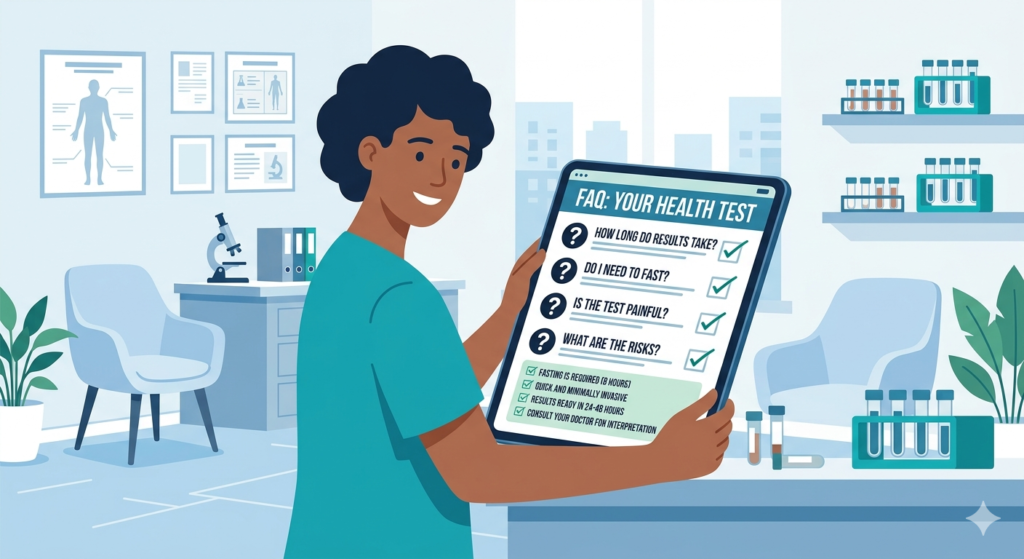
PEth remains detectable in the blood for up to 28 days after alcohol consumption. The exact duration depends on how much was consumed and how frequently.
No. A standard blood alcohol test (BAC test) measures the amount of alcohol currently in your bloodstream — it only shows intoxication at the moment of testing. A PEth test, by contrast, measures a metabolite that builds up over time, reflecting drinking over the previous 4 weeks.
Even moderate social drinking can produce detectable levels of PEth. Research suggests that consuming as few as 1–2 standard drinks may generate low-level PEth that a sensitive laboratory test can detect. Higher and more frequent consumption leads to proportionally higher levels.
If you need to show abstinence, any alcohol consumption in the 28 days before your test could result in a positive result. If you have consumed alcohol recently and have an upcoming test, speak with the testing provider or your legal team for guidance.
In most cases, no. Many private testing services allow individuals to self-refer. In legal or court-ordered testing, however, the request is typically made by a solicitor, social worker, or court.
EtG (Ethyl Glucuronide) is another direct alcohol biomarker, but it is typically found in urine and has a shorter detection window (3–5 days). PEth, found in blood, offers a 28-day window and is generally considered more reliable because it is less susceptible to environmental exposure. For a comprehensive overview of biomarkers, the For a comprehensive overview of alcohol biomarkers, the National Institute on Alcohol Abuse and Alcoholism (NIAAA) provides detailed scientific resources on this topic.
Key Takeaways
- PEth (Phosphatidylethanol) is a direct alcohol biomarker — it only forms in the presence of ethanol.
- The PEth alcohol test detects drinking that occurred up to 28 days before the sample is collected.
- Results are quantitative, meaning they provide an actual concentration level, allowing experts to distinguish between abstinence, moderate drinking, and heavy consumption.
- PEth is not affected by medications, health conditions, hand sanitizers, or non-alcoholic beverages.
- It is widely used in family law, workplace compliance, healthcare monitoring, and clinical settings.
- Dry blood spot collection makes PEth testing minimally invasive and convenient.
- For the most accurate overall picture, PEth should ideally be combined with other biomarkers such as hair alcohol testing.
| Need a PEth Alcohol Test? We offer fast, confidential, and accredited PEth testing with results in 3–5 working days. No doctor referral required. Click Here. |