What Is a PEth Test?
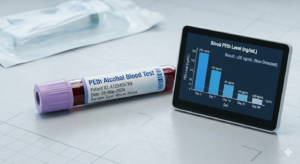
A PEth test — short for phosphatidylethanol test — is a highly accurate blood-based biomarker test used to detect recent alcohol consumption. Unlike traditional alcohol tests that measure how much alcohol is in your system at a single moment in time, the PEth test looks back over a period of up to four weeks (28 days), revealing a person’s drinking pattern rather than just a snapshot.
PEth is widely considered one of the most reliable and scientifically advanced methods available for detecting moderate to heavy alcohol consumption. It is used in clinical medicine, workplace screening, family law proceedings, forensic investigations, and addiction treatment monitoring.
In simple terms, when a person drinks alcohol, their body produces a specific phospholipid — phosphatidylethanol — which accumulates in red blood cells. By measuring this compound in a blood sample, laboratories can determine whether a person has been drinking over the past month, and to what degree.
Because the PEth test is far more specific to alcohol than many other biomarkers, it is increasingly replacing older tests like GGT (gamma-glutamyl transferase) and CDT (carbohydrate-deficient transferrin) in clinical and legal settings.
What Is Phosphatidylethanol (PEth)?
Phosphatidylethanol (PEth) is a group of abnormal phospholipids (fatty compounds) that are formed in the body exclusively in the presence of ethanol (alcohol). They are produced through a biochemical reaction involving an enzyme called phospholipase D, which uses ethanol as a substrate instead of water when alcohol is present in the bloodstream.
PEth compounds are incorporated into the membranes of red blood cells (erythrocytes). Because red blood cells have a lifespan of approximately 28 days before being broken down and replaced, PEth biomarkers persist in the body for the same period. This makes PEth a reliable retrospective biomarker — it tells us about alcohol consumption over the preceding month.
There are over 40 different molecular species of PEth, but the most abundant and diagnostically significant is PEth 16:0/18:1, which is the form most commonly measured by clinical laboratories. According to Mayo Clinic Laboratories, this is the standard confirmatory test for whole blood phosphatidylethanol.
Key facts about PEth as a biomarker:
- It is 100% specific to alcohol — it is only produced when ethanol is consumed. No food, medication, or environmental factor can produce PEth.
- It is incorporated into red blood cell membranes, giving it a stable and predictable detection window.
- It reflects cumulative alcohol exposure, not just a single drinking episode.
- It can differentiate between abstinence, light drinking, moderate drinking, and heavy drinking.
How Does a PEth Test Work?
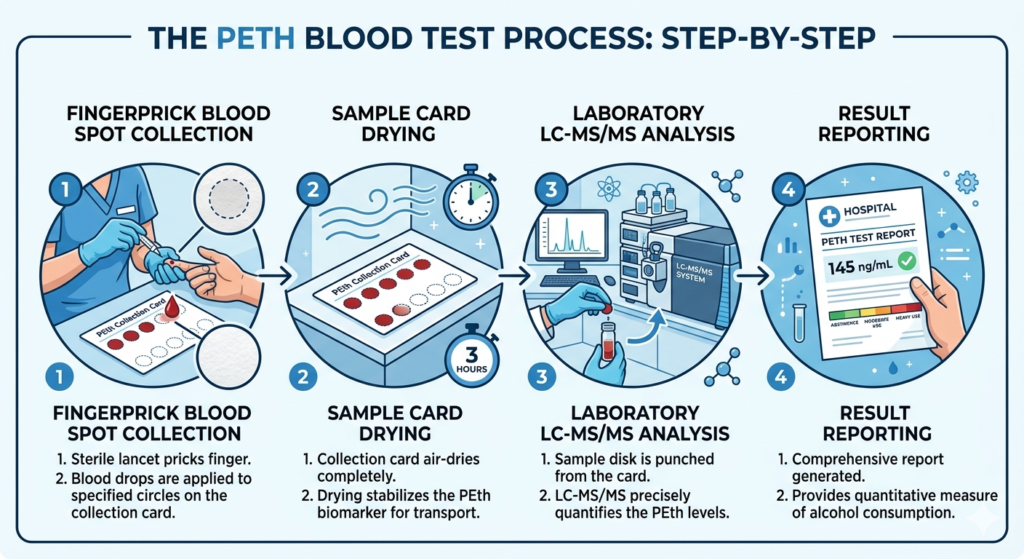
The PEth testing process is straightforward and minimally invasive. Here is how it works from start to finish:
Step 1: Sample Collection
A PEth test requires only a very small amount of blood. There are two main collection methods:
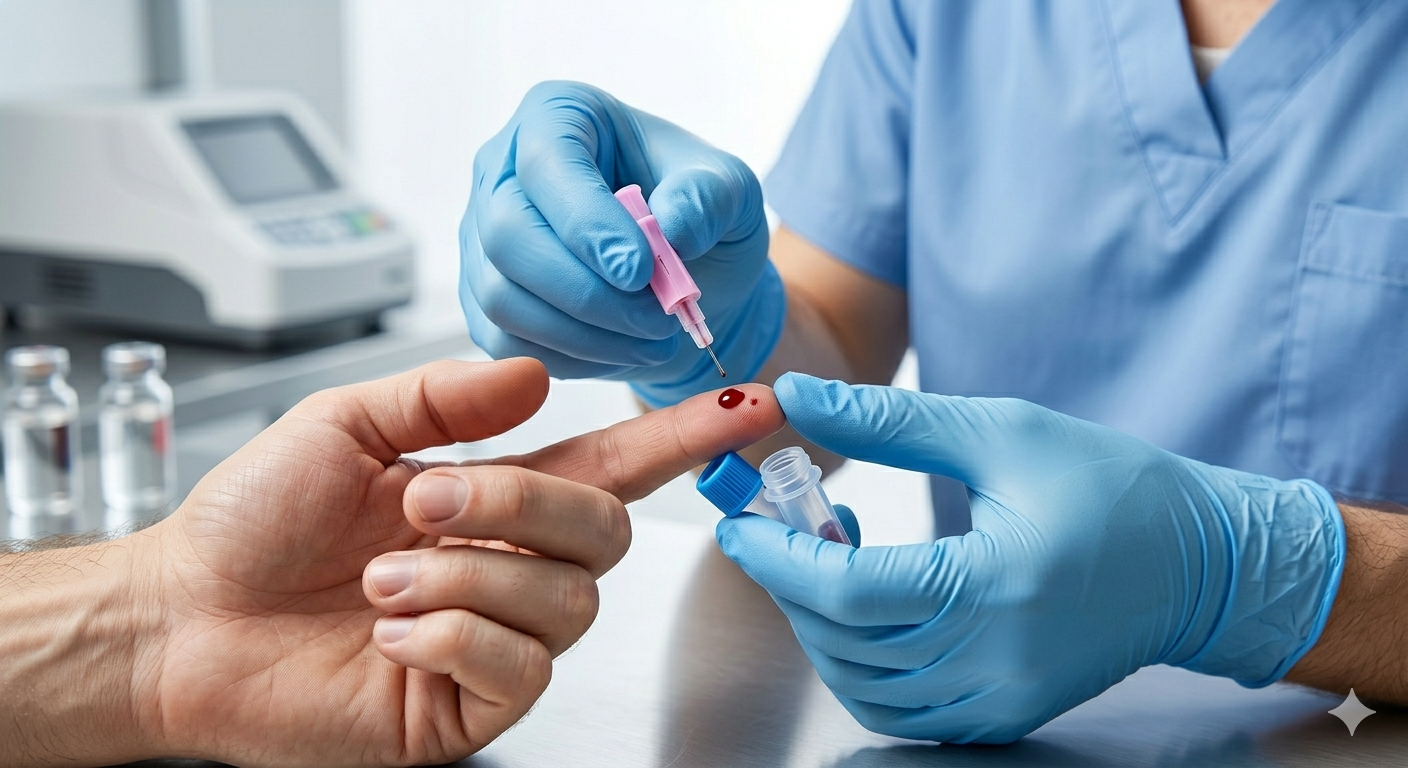
- Dried Blood Spot (DBS) collection: A healthcare professional uses a small lancet to prick the fingertip (or heel, in infants) and collects a few drops of blood onto a specially treated filter card. This is the most common and least invasive method.
- Venipuncture (whole blood): A traditional blood draw from a vein in the arm. This is used in some clinical and forensic settings where a larger volume of blood is needed.
According to Cansford Laboratories, PEth requires only a few drops of blood via dried blood spots, making it a modern and minimally invasive alternative to conventional blood testing.
Step 2: Sample Processing
The filter card (or blood sample) is shipped to an accredited laboratory. If using dried blood spots, the sample must be allowed to dry fully before packaging to prevent degradation.
Step 3: Laboratory Analysis
In the laboratory, the sample is processed using Liquid Chromatography-Mass Spectrometry (LC-MS/MS) — the gold standard analytical technique. This method is highly specific and sensitive, capable of detecting even trace amounts of PEth in the bloodstream. The laboratory quantifies the level of PEth in nanograms per milliliter (ng/mL).
Step 4: Result Reporting
The laboratory issues a report stating the measured PEth level in ng/mL. This result is then interpreted against established clinical cutoff thresholds to classify the level of alcohol consumption.
Most accredited labs — including those in the UK operating under UKAS accreditation — provide results within 3 to 5 working days from receipt of the sample.
PEth Test Detection Window
One of the most important aspects of the PEth test is its detection window — the period of time after alcohol consumption during which the test can still return a positive result.
- PEth becomes detectable in the bloodstream within 1 to 2 hours of alcohol consumption.
- PEth remains detectable for up to 28 days (four weeks) after the last drink.
This detection window is significantly longer than most other alcohol tests:
| Test Type | Detection Window |
|---|---|
| Breathalyzer | 12–24 hours |
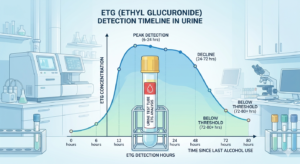
| Urine ETG test | 3–5 days |
| Blood alcohol (BAC) | 12–24 hours |
| CDT test | 2–4 weeks |
| PEth test | Up to 28 days |
| Hair alcohol test | 6–12 months |
The 28-day window makes PEth particularly valuable in contexts where long-term alcohol monitoring is required — such as custody hearings, probation conditions, addiction recovery programs, and workplace compliance monitoring.
It is important to note that the detectability of PEth depends on the amount of alcohol consumed. A single social drinking episode may result in detectable but low PEth levels, while chronic heavy drinking will produce substantially elevated levels. According to the American Academy of Family Physicians (AAFP), PEth testing is best used to detect moderate or heavy alcohol use over a four-week period, and it should not be used to confirm abstinence following very light consumption.
PEth Test Cutoff Levels Explained
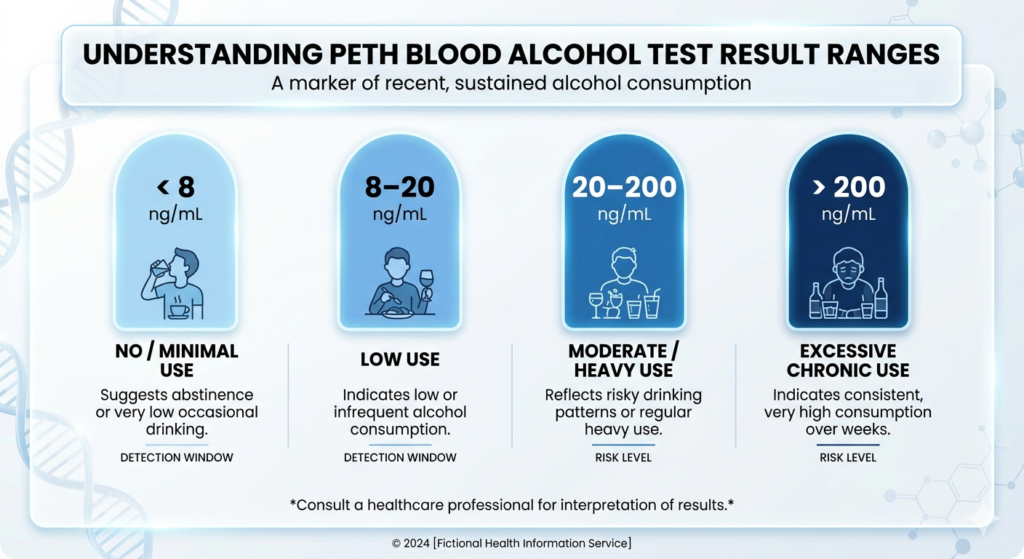
Understanding PEth test results requires knowing the cutoff thresholds used by clinical and forensic laboratories. PEth results are reported in nanograms per milliliter (ng/mL) and are typically interpreted as follows:
| PEth Level (ng/mL) | Interpretation |
|---|---|
| < 8 ng/mL | Non-detect / Abstinence or minimal incidental exposure |
| 8 – 20 ng/mL | Low-level alcohol use (light drinking) |
| 20 – 200 ng/mL | Moderate to heavy alcohol consumption |
| > 200 ng/mL | Excessive / Chronic heavy alcohol use |
According to the AAFP (2023), a PEth level of 20 ng/mL or higher is widely used as the clinical threshold to identify moderate to heavy alcohol consumption. Some forensic and security contexts use even stricter cutoffs.
In their published guidelines on PEth use in security environments, Ulwelling and Smith (2018) noted that PEth levels above 20 ng/mL are reliably associated with regular drinking patterns. However, interpretation must always be done by a qualified medical professional who understands the context — a single heavy drinking session in the days preceding a test might produce levels that appear similar to regular moderate drinking.
It is also worth noting that PEth cannot determine the exact quantity or pattern of alcohol consumed. It provides a picture of whether a person has been drinking and at what approximate level, but it does not tell a clinician on which specific days alcohol was consumed or how many units were drunk per session.
PEth Test Accuracy and Reliability
The PEth test is among the most accurate biomarker tests for alcohol consumption available today. Multiple peer-reviewed studies support its reliability:
Prospective Study Evidence
A small prospective randomized study published in Alcohol and Alcohol (Kechagias et al., 2015) followed 44 healthy adults over three months, split between abstinence and moderate wine consumption groups. The AUROC (Area Under the Receiver Operating Characteristic Curve) for PEth was an impressive 0.92 (95% CI, 0.82 to 1.0), demonstrating excellent accuracy in distinguishing abstention from moderate alcohol use.
Trauma Patient Data
A study of 238 adult trauma patients (Gerbase et al., Clinical Toxicology, 2021) compared PEth whole blood levels to AUDIT-C questionnaire scores drawn within six hours of a trauma incident. The AUROC was 0.791 for general alcohol misuse and 0.885 for severe misuse — both indicating strong diagnostic performance.
Large-Scale Meta-Analysis
A meta-analysis of 21 studies (n = 3,085) published in Alcoholism: Clinical and Experimental Research (Hahn et al., 2021) found that among patients with a positive AUDIT-C score, 82% had detectable PEth levels of 8 ng/mL or higher. The analysis also identified factors that can influence sensitivity — notably that patients with a BMI over 30 kg/m² may show slightly reduced PEth detectability.
Sensitivity and Specificity
At the standard threshold:
- Sensitivity for abstinence detection: 100% (at ≤4.2 ng/mL cutoff)
- Specificity for moderate consumption: 100% (at ≥28 ng/mL cutoff)
These figures make PEth one of the most powerful objective tools available for confirming or refuting self-reported alcohol use.
What Are PEth Tests Used For?
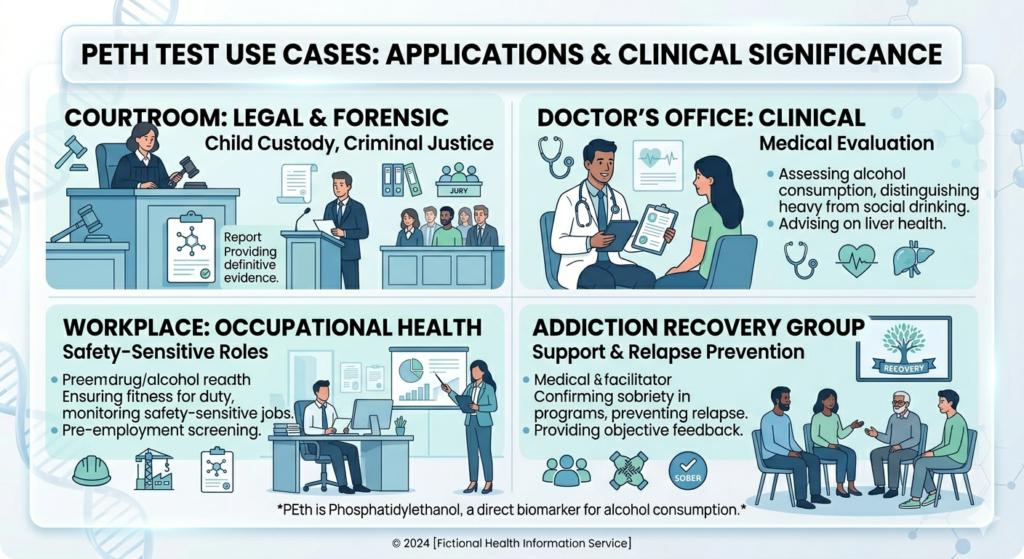
PEth testing has broad applications across multiple sectors. Its high accuracy, long detection window, and objective nature make it suitable whenever reliable evidence of alcohol consumption — or abstinence — is required.
1. Clinical Medicine and Addiction Treatment
Physicians use PEth testing as part of the initial evaluation and ongoing monitoring of patients with alcohol use disorder (AUD). The American Psychiatric Association’s practice guidelines for AUD pharmacological treatment suggest testing for PEth or other alcohol biomarkers for monitoring purposes. PEth helps doctors understand whether a patient is adhering to abstinence requirements during treatment.
2. Family Law and Child Custody Cases
PEth is frequently ordered in family court proceedings where concerns about a parent’s alcohol use may affect the safety of children. It provides courts with objective, medically credible evidence of whether a parent has been drinking during the monitoring period. Because PEth cannot be manipulated by timing — unlike a breathalyzer — it is far harder to “beat” by simply not drinking in the 24 hours before a test.
3. Workplace Alcohol Monitoring
High-risk industries such as aviation, maritime, transport, construction, rail, and oil and gas use PEth testing to ensure employees in safety-critical roles are not regularly consuming alcohol. According to Randox Testing Services, PEth is particularly effective in settings like aviation and transport where ongoing monitoring of professionals is critical.
4. Monitoring of Medical Professionals
Doctors, nurses, dentists, pharmacists, and other healthcare professionals who have been flagged for alcohol-related concerns may be subject to PEth monitoring by their regulatory bodies. The British Medical Association and various licensing bodies have used PEth testing to assess fitness to practice.
5. Drink Driving and Legal Cases
PEth results can be submitted as evidence in criminal proceedings, particularly for repeat drink-driving offences. A high PEth reading corroborates a pattern of regular heavy drinking, which can be relevant to sentencing.
6. Liver Transplant Evaluation
Many transplant programs require a period of confirmed abstinence before a patient is eligible for a liver transplant. PEth testing, alongside other biomarkers, is used to objectively confirm abstinence during this pre-transplant period.
7. Probation and Parole Conditions
Courts can order regular PEth testing as part of probation or parole conditions for offenders whose crimes were alcohol-related.
PEth Test vs. Other Alcohol Biomarkers
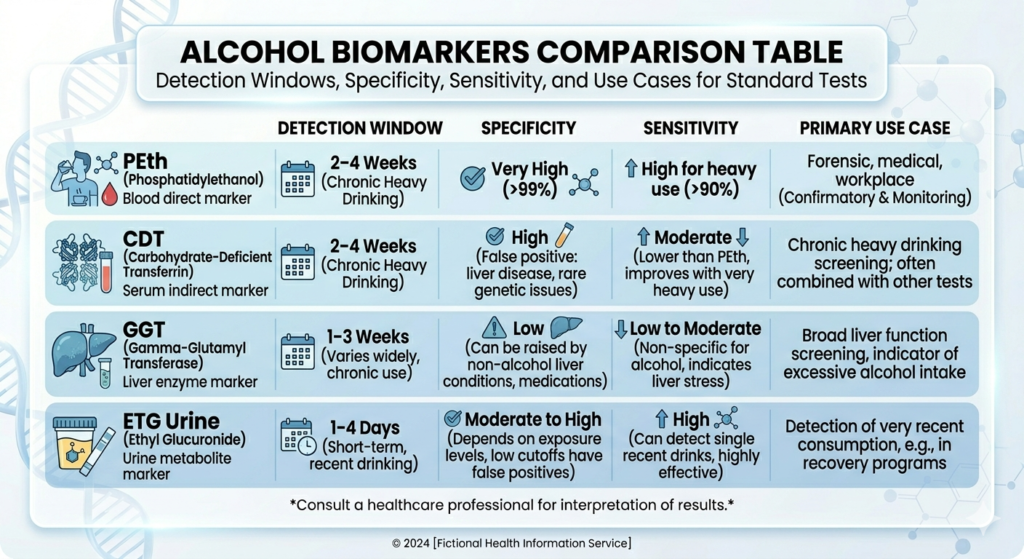
Understanding how PEth compares to other alcohol testing methods helps explain why it has become the preferred biomarker in many clinical and legal settings.
| Biomarker | Type | Detection Window | Alcohol Specificity | Limitations |
|---|---|---|---|---|
| PEth | Blood | Up to 28 days | Very High (100%) | Cannot detect light/single drinking reliably |
| CDT (Carbohydrate-Deficient Transferrin) | Blood | 2–4 weeks | Moderate | Affected by liver disease, genetics |
| GGT (Gamma-Glutamyl Transferase) | Blood | 2–4 weeks | Low | Elevated by many non-alcohol causes |
| ETG (Ethyl Glucuronide) | Urine | 3–5 days | High | Short detection window, false positives possible |
| BAC (Blood Alcohol Concentration) | Blood/Breath | 12–24 hours | High | Only detects current intoxication |
| Hair EtG/FAEE | Hair | Up to 12 months | Moderate | Cannot distinguish occasional from regular use precisely |
PEth stands out for its combination of a long detection window, high specificity, and objective quantification. Unlike GGT and CDT, which can be elevated by conditions unrelated to alcohol, PEth is uniquely produced in the presence of ethanol — making it the gold standard for medium-term (one month) alcohol consumption monitoring.
PEth Test in Family Law and Court Cases
Family law is one of the most common contexts where PEth testing is ordered. When a court needs to determine whether a parent or caregiver has been consuming alcohol during a specified monitoring period, a PEth test provides objective, scientifically validated evidence.
A PEth test ordered for family law purposes is typically conducted using a chain-of-custody protocol — a documented procedure ensuring the sample is collected under controlled conditions, cannot be tampered with, and can be defended in court. The chain of custody documentation tracks every step from sample collection through analysis to reporting.
Judges, solicitors, social workers, and CAFCASS (Children and Family Court Advisory and Support Service) officers may all request PEth testing. Results can support or refute allegations of alcohol misuse, inform decisions about contact arrangements, and provide benchmarks for ongoing monitoring as part of a court order.
It is critically important that PEth tests ordered for legal purposes are collected by an accredited collection officer and analyzed by a UKAS-accredited laboratory. Results from non-accredited providers may not be admissible as evidence.
For more information on alcohol testing for family law, the Society of Hair Testing (SoHT) publishes consensus guidelines on best practice for the use of alcohol biomarkers in medico-legal contexts.
PEth Test in Workplace Drug & Alcohol Programs
Workplace alcohol testing programs have historically relied on breathalyzer tests, which only detect current intoxication. While breathalyzers remain important for detecting whether an employee is acutely intoxicated at work, they cannot determine whether an employee is a habitual heavy drinker who might pose a safety risk even when not immediately intoxicated.
PEth testing addresses this gap. In industries where safety is critical — aviation, construction, rail, maritime, and transport — PEth testing can be incorporated into:
- Pre-employment screening: To assess whether a candidate has a pattern of heavy drinking before being placed in a safety-critical role.
- Return-to-work testing: After an employee has returned from a period of treatment or suspension related to alcohol.
- Random monitoring programs: As part of an ongoing fitness-for-duty program.
- For-cause testing: When there is reasonable suspicion of regular alcohol misuse based on behavioral indicators.
Companies must ensure their workplace alcohol testing policy explicitly covers the use of PEth testing, including how results will be interpreted and what actions will follow from a positive result. HR and occupational health advisors should work with legal counsel to ensure the policy complies with employment law in their jurisdiction.
Factors That Can Affect PEth Results
While PEth is highly accurate, several factors can influence test results and their interpretation:
1. BMI / Body Composition
Research published in Alcoholism: Clinical and Experimental Research found that patients with a BMI of 30 kg/m² or greater had lower odds of detectable PEth levels (OR = 0.44). Higher body fat may slightly dilute PEth concentrations in blood.
2. Hemoglobin Levels
Normal or elevated hemoglobin levels are associated with higher probability of detectable PEth (OR = 2.19). Conditions affecting red blood cell count or lifespan may theoretically influence PEth levels.
3. Liver Fibrosis
Advanced hepatic (liver) fibrosis is associated with slightly elevated PEth levels (OR = 1.83), likely because liver disease alters the metabolism of phospholipids.
4. Single vs. Chronic Drinking
PEth is most reliable for detecting chronic regular drinking. A single heavy drinking episode, particularly early in the detection window, may produce lower levels than expected for regular weekly consumption.
5. Method of Blood Collection
Research has shown that PEth sensitivity is not significantly affected by whether blood is collected via fingerprick (dried blood spot) or venipuncture, allowing flexible collection protocols.
6. Sample Handling
Dried blood spot cards must be allowed to dry fully before packaging. Inadequate drying or improper storage can degrade the sample and lead to falsely low results.
How to Prepare for a PEth Test
If you have been asked to take a PEth test — whether for medical, legal, or workplace reasons — here is what you need to know:
- No special fasting is required before a PEth blood test. It is not affected by food intake.
- Avoid alcohol entirely if you wish to demonstrate abstinence. Because PEth is detectable for up to 28 days, you must abstain for a full calendar month to achieve a result below the detection threshold (assuming a consistent pattern of drinking has been present previously).
- Disclose all medications to your testing provider. While no medications are known to produce false-positive PEth results (because PEth is alcohol-specific), your provider may wish to document your medical history for completeness.
- Cooperate with identity verification. For legally admissible results, you will typically need to provide photo ID at the time of sample collection, and the collection officer will complete chain-of-custody documentation.
- Ask about turnaround time. Most accredited laboratories return PEth results within 3 to 5 working days from receipt of the sample.
PEth Test Cost
The cost of a PEth test varies depending on the provider, region, and whether it is part of a panel of tests or ordered individually.
- In the United States, PEth testing is billed under CPT code 80321. The approximate cost is around $150 for a standalone test, though this varies by provider. Medicare patients may require an Advance Beneficiary Notice of Noncoverage (ABN) for reimbursement.
- In the United Kingdom, PEth blood testing is typically priced between £80 and £250, depending on whether it is a standalone test or combined with a hair alcohol test and whether it is for private or medico-legal purposes.
Insurance coverage varies. Clinical PEth testing ordered by a physician for alcohol use disorder monitoring may be partially covered, while tests ordered for legal purposes are typically self-funded.
For the most current pricing, it is best to contact an accredited testing laboratory directly.
Frequently Asked Questions
A single light drinking episode is unlikely to produce a PEth result above the standard clinical threshold of 20 ng/mL. However, heavier single-session drinking (binge drinking) could produce detectable PEth levels above 8 ng/mL. Generally, PEth is most reliable as an indicator of regular moderate-to-heavy drinking over weeks, not as a detector of occasional social drinking.
PEth is detectable in whole blood for up to 28 days after the last alcoholic drink. The exact duration depends on how much alcohol was consumed and over what period. Light drinkers may clear PEth faster than heavy chronic drinkers.
No. PEth is a phospholipid that is incorporated into the membranes of red blood cells. It is only detectable in blood samples (either whole blood via venipuncture or dried blood spots). Different biomarkers — such as ethyl glucuronide (EtG) and fatty acid ethyl esters (FAEE) — are used for urine and hair testing respectively.
No. Because PEth is specifically produced within the body as a metabolic response to ingested ethanol, external exposures to alcohol (such as mouthwash or hand sanitizer) do not produce PEth in the blood. This is one of PEth’s major advantages over some urine alcohol tests (like EtG), which can theoretically be affected by environmental alcohol exposure.
A result below the laboratory’s lower limit of detection (typically <8 ng/mL) suggests that the individual has not consumed alcohol at moderate-to-heavy levels in the preceding month. However, as the AAFP notes, PEth cannot definitively confirm abstinence following very light or incidental alcohol exposure — it should not be used as the sole tool to confirm complete abstinence.
If a person was a heavy regular drinker before stopping, two weeks of abstinence may not be enough for PEth to drop below the 20 ng/mL threshold. A full 28 days of abstinence is generally recommended to ensure PEth levels have returned to the non-detect range for chronic heavy drinkers.
Yes. PEth testing results are accepted in UK courts, including family courts and magistrates’ courts. They may be requested as part of DVLA medical assessments for drivers who have had their licence revoked due to drink-driving offences. Forensic PEth tests must be conducted under chain-of-custody conditions for the results to be legally admissible.
Yes, potentially. If weekend drinking is heavy (binge drinking), it can produce PEth levels above detection thresholds that persist for several weeks. However, very moderate weekend drinking (1–2 units) may not consistently produce results above 20 ng/mL. The test is most reliable when consumption is regular and at moderate-to-heavy levels.
Conclusion
The PEth test represents a significant advancement in alcohol biomarker science. Its ability to detect moderate to heavy alcohol consumption over a 28-day window with exceptional specificity makes it one of the most reliable tools available for clinical, legal, and occupational contexts.
Unlike breathalyzers — which only catch someone who has been drinking in the past 24 hours — and unlike liver enzyme tests (GGT, CDT) — which can be elevated by conditions unrelated to alcohol — PEth is uniquely and directly produced by the body’s reaction to ethanol. That biological specificity is what makes it so powerful.
Whether you are a clinician monitoring a patient in recovery, a solicitor advising a client in a family law case, an HR professional designing a workplace alcohol policy, or an individual wanting to understand a test result, the key points to remember are:
- PEth is detectable for up to 28 days.
- A level above 20 ng/mL typically indicates moderate to heavy drinking.
- Results must be interpreted by a qualified professional in the appropriate clinical context.
- The test must be collected under proper chain-of-custody conditions for legal admissibility.
- PEth cannot confirm complete abstinence following very light or incidental alcohol use, but it is an excellent tool for detecting regular meaningful consumption.
If you require a PEth test — for yourself, for a client, or for a workplace program — it is essential to use an accredited laboratory with documented quality management systems to ensure results are reliable and legally defensible.
Disclaimer: This article is intended for informational purposes only and does not constitute medical or legal advice. If you require guidance on alcohol testing for medical, legal, or workplace purposes, please consult a qualified professional.