Introduction: Why the PEth Test Calculator Matters
Whether you are preparing for a court-ordered alcohol screening, monitoring your own sobriety, or simply trying to understand how long alcohol remains detectable in your blood — the PEth test calculator is one of the most practical tools available today.
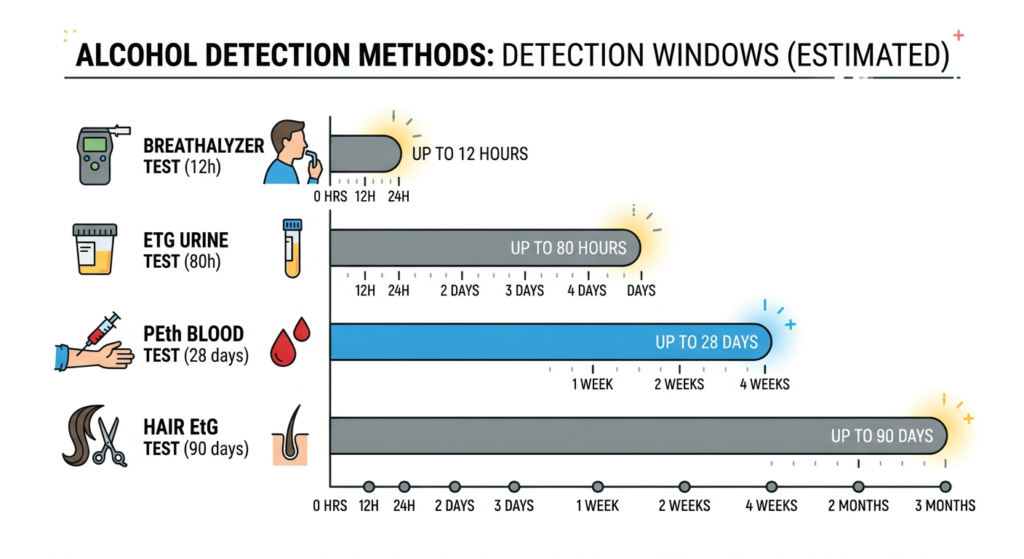
Unlike a breathalyzer that only detects alcohol present in your body right now, or an ETG urine test that looks back just 80 hours, the phosphatidylethanol (PEth) blood test can detect alcohol consumption for up to 28 days after your last drink. That’s what makes it both the most accurate — and the most feared — alcohol biomarker test in clinical and legal settings.
In this guide, we’ll explain exactly how a PEth calculator works, what the science says about PEth levels and half-life, how much alcohol it takes to trigger a positive result, and what you can realistically expect if you’re preparing for a PEth blood test.
🧪 PEth Test Calculator
Phosphatidylethanol (PEth) — direct alcohol biomarker
Individual results depend on metabolism & timing. This tool provides educational estimation.
What Is a PEth Test? (And Why Is It Different?)
Phosphatidylethanol (PEth) is a direct alcohol biomarker — a phospholipid that forms in red blood cell membranes only when ethanol is present in the body. Unlike indirect markers such as Gamma-GT or MCV (mean corpuscular volume), PEth cannot be elevated by liver disease, dietary factors, or medications. It is caused exclusively by alcohol consumption.
This makes the PEth test extraordinarily precise. According to clinical data, PEth testing delivers approximately 99% sensitivity for identifying heavy alcohol use. It’s also highly specific — meaning it produces virtually no false positives from incidental alcohol exposure (mouthwash, hand sanitizer, food, etc.).
PEth vs. Other Alcohol Tests
| Test Type | Sample | Detection Window | False Positive Risk |
|---|---|---|---|
| Breathalyzer | Breath | 12–24 hours | Low |
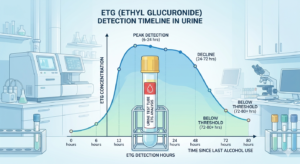
| ETG (Ethyl Glucuronide) | Urine | 72–80 hours | Moderate (mouthwash, etc.) |
| CDT (Carbohydrate-Deficient Transferrin) | Blood | Several weeks (chronic only) | Low |
| PEth (Phosphatidylethanol) | Blood | Up to 28 days | Very Low |
| EtG in Hair | Hair | Up to 90 days | Very Low |
The PEth Test Calculator is currently considered the gold standard for verifying alcohol abstinence over the past 2–4 weeks, making it the preferred choice in legal proceedings, liver transplant evaluations, occupational health monitoring, and addiction treatment programs.
How the PEth Test Calculator Works
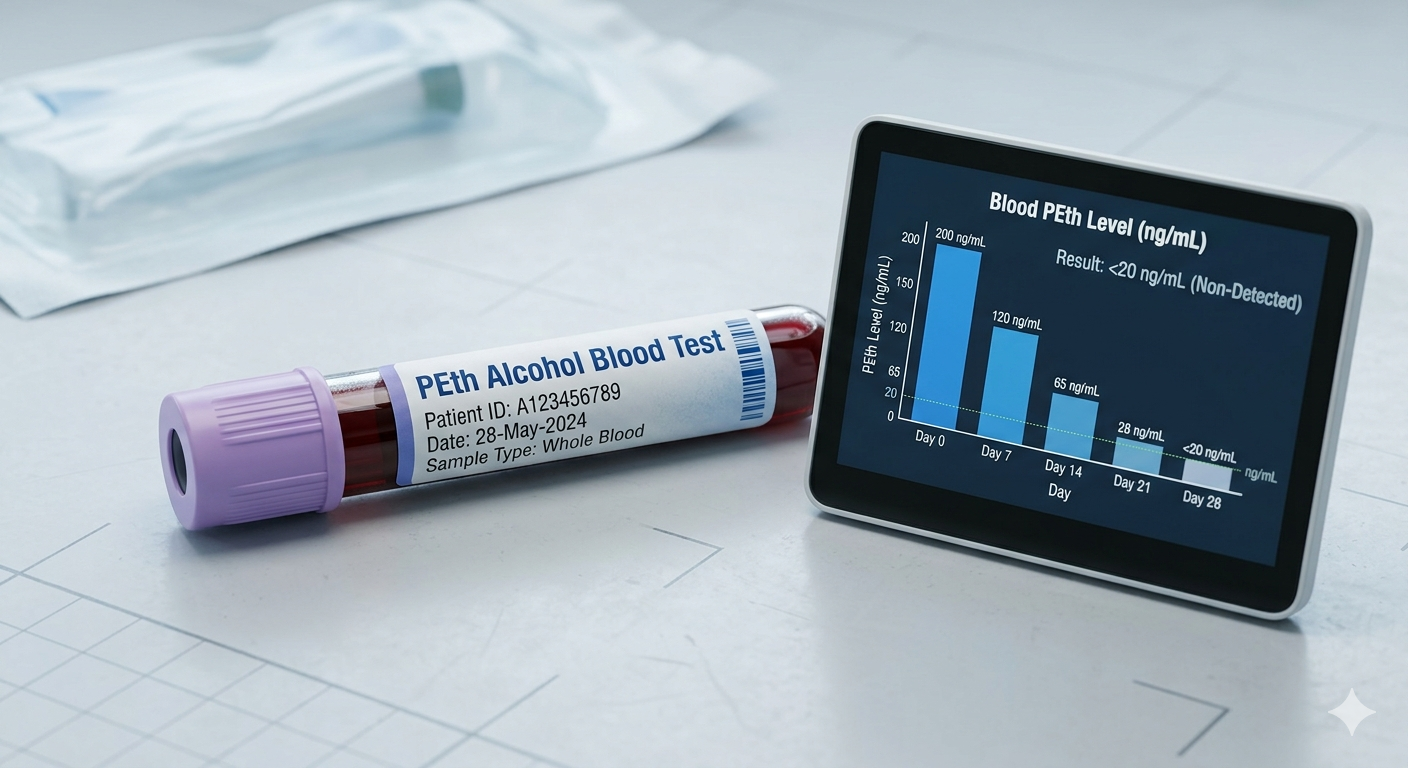
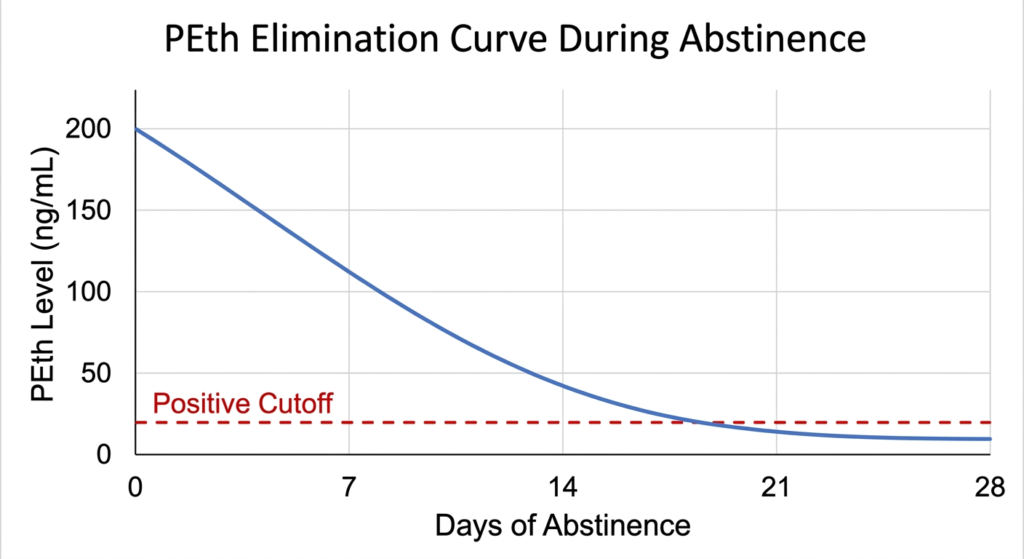
A PEth test calculator uses the known biological half-life of PEth and your estimated starting concentration to calculate when your blood levels will fall below the clinical “negative” threshold of 20 ng/mL.
Here is the core formula used by most PEth calculators:
Current PEth Level = Starting Level × (0.5)^(Days Elapsed ÷ Half-Life)
The average half-life of PEth is 4.5 days, though clinical studies have recorded values ranging from 3 to 10 days depending on individual factors such as:
- Age and overall liver health
- Red blood cell (RBC) turnover rate
- Frequency and duration of past drinking
- Individual metabolic rate
Example: Heavy Drinker Starting at 200 ng/mL
Using a 4.5-day half-life, here is how long it would take a heavy drinker to reach a clean result:
| Day | Estimated PEth Level |
|---|---|
| Day 0 | 200 ng/mL (Heavy use level) |
| Day 4.5 | 100 ng/mL |
| Day 9 | 50 ng/mL |
| Day 13.5 | 25 ng/mL |
| Day 18 | ~12.5 ng/mL ✅ Below cutoff |
For moderate or social drinkers starting at lower levels, the clearance window may be as short as 7–12 days.
PEth Levels Chart: What Do the Numbers Mean?
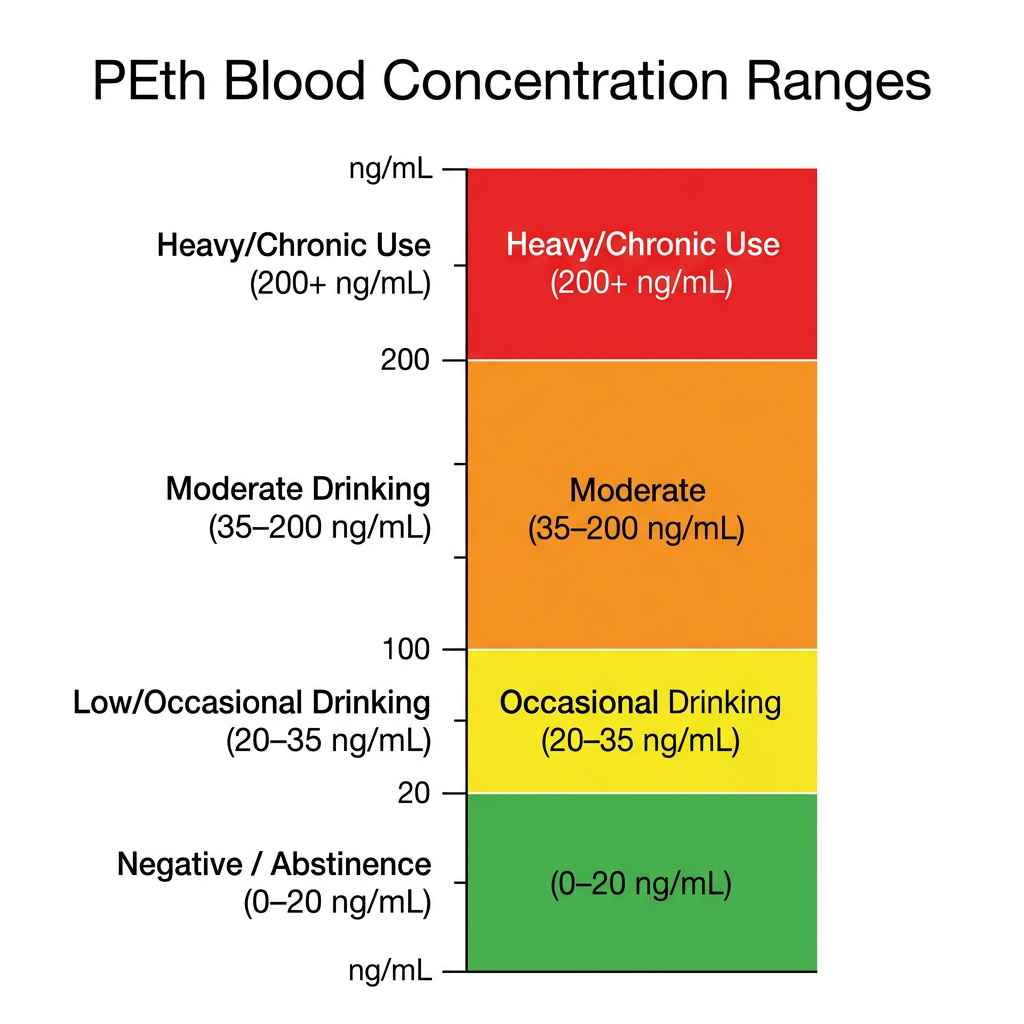
Understanding your PEth concentration is crucial for interpreting any test result. Clinical guidelines from organizations such as SAMHSA and WHO use the following thresholds:
| PEth Level | Interpretation |
|---|---|
| < 20 ng/mL (< 20 µg/L) | Negative — consistent with abstinence or very low intake |
| 20–35 ng/mL | Low/occasional consumption in the past month |
| 35–200 ng/mL | Social or moderate drinking in the past month |
| > 200 ng/mL | Excessive or chronic heavy drinking in the past month |
Important note on units: Some labs report in ng/mL, others in µg/L. These are numerically equivalent (1 ng/mL = 1 µg/L), so no conversion is needed.
The standard clinical cutoff used in most legal and occupational settings is 20 ng/mL. Some institutions use stricter thresholds of 10 ng/mL for total abstinence verification (such as pre-transplant evaluations). Learn More
How Much Alcohol Does It Take to Test Positive for PEth?
This is one of the most frequently asked questions about PEth testing, and the answer may surprise you.
PEth begins to form in red blood cell membranes within 1–2 hours after the first drink. Even a single drinking episode can push your PEth level above the 20 ng/mL threshold within 8–24 hours. Here’s what the research shows:
- A single binge episode (5+ drinks in one session) can raise PEth above detectable levels within 8–24 hours, and it can remain detectable for up to 12 days.
- Moderate/social drinking (a few drinks per week) typically produces PEth levels in the 20–100 ng/mL range.
- Daily heavy drinking (more than 60 grams of ethanol per day — roughly 7+ standard drinks) consistently produces PEth levels above 200 ng/mL.
- Chronic heavy use over weeks or months can result in PEth levels exceeding 1,000 ng/mL.
One standard alcoholic drink contains approximately 14 grams of pure ethanol (a 12 oz beer at 5%, 5 oz wine at 12%, or 1.5 oz spirits at 40%). The PEth test is sensitive enough to detect alcohol intake that other blood tests like CDT or liver enzymes would completely miss.
PEth Half-Life Explained: The Science of Clearance
PEth elimination follows first-order kinetics — meaning it declines by a constant percentage each day rather than a fixed amount. This is the same pattern seen with most drugs and medications in the bloodstream.
Because PEth is embedded in the membrane of red blood cells (RBCs), and red blood cells have an average lifespan of 90–120 days, PEth is not metabolized or cleared through the kidneys. Instead, it disappears gradually as RBCs naturally die off and are replaced.
This is critically important for understanding why:
- Drinking water does not flush PEth — it is not water-soluble or excreted in urine
- Exercise has no effect — physical activity cannot accelerate RBC turnover
- Diuretics and detox drinks are useless — these only affect urine-based tests
- Liver detox supplements won’t help — PEth clearance is RBC-dependent, not liver-dependent
The only variable that matters is time and abstinence. More
Who Orders a PEth Test — and Why?
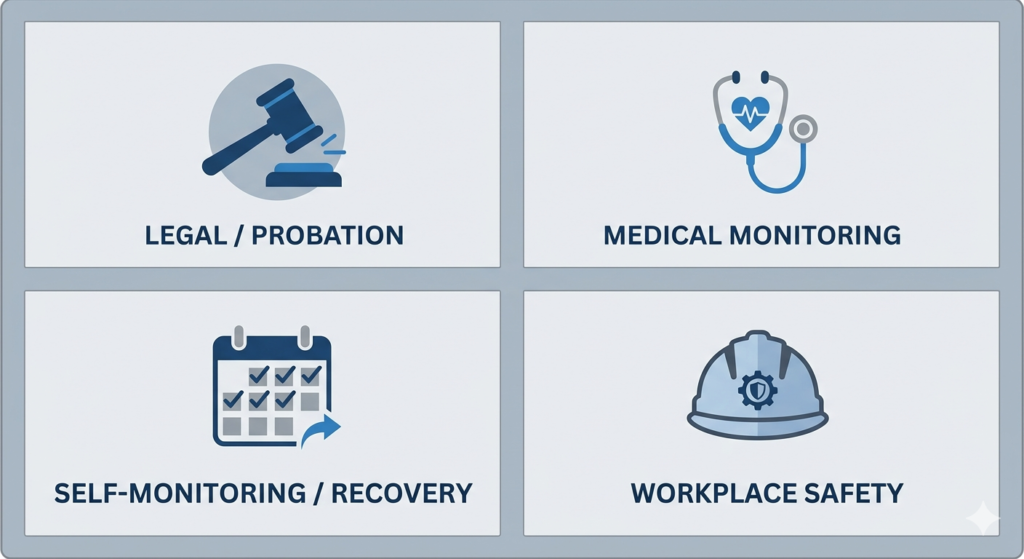
PEth testing is ordered across a wide variety of contexts. Understanding who uses it and why can help you prepare appropriately.
Legal and Court Proceedings
Probation officers, family court judges, and DUI/DWI case managers frequently order PEth tests to verify alcohol abstinence. Because PEth has a much longer detection window than ETG or breathalyzers, it is harder to “time” around.
Medical and Clinical Settings
Doctors use PEth testing before liver transplants, during addiction treatment monitoring, and in occupational health programs where employees hold safety-sensitive roles. Some treatment programs require monthly PEth tests to confirm sobriety.
Self-Monitoring
Many people going through recovery or participating in sobriety programs choose to test themselves proactively using PEth. It provides an objective, quantitative measure of abstinence over the past several weeks.
Workplace Testing
Certain industries — aviation, healthcare, heavy machinery — may use PEth as part of return-to-duty evaluations after an alcohol-related incident.
How to Use a PEth Test Calculator: Step-by-Step
Most online PEth Test Calculator work in one of two modes:
Mode 1 — I Don’t Have Lab Results Yet (Estimate from Drinking Habits)
- Select your drinking intensity: Heavy/Chronic, Binge Episode, or Moderate/Social
- Enter the number of days since your last drink
- The calculator estimates your starting PEth based on typical consumption patterns and applies the half-life formula to project your current level
- It outputs an estimated “Safe Date” when your level will fall below 20 ng/mL
Mode 2 — I Have a Lab Result
- Enter your confirmed PEth level from a recent blood test (in ng/mL)
- Enter how many days have passed since that test was taken
- The calculator applies the 4.5-day half-life to project your current level and your estimated clean date
Key variables that affect results:
- Starting PEth concentration (determined by how much/how long you drank)
- Individual half-life variance (3–10 days across the population)
- Days elapsed since last drink or last known lab result
Always treat calculator results as estimates, not guarantees. Real-world results vary because individual biology differs. When the stakes are high — a court date, a transplant evaluation, a custody hearing — always build in extra buffer time beyond the calculator’s estimate.
PEth Test vs. ETG Test: Which Is More Accurate?
Both PEth and ETG (Ethyl Glucuronide) are direct biomarkers of alcohol metabolism, but they behave very differently and serve different purposes.
| Feature | PEth (Blood) | ETG (Urine) |
|---|---|---|
| Sample type | Blood | Urine |
| Detection window | Up to 28 days | Up to 80 hours |
| False positive risk | Very low | Moderate (hand sanitizer, mouthwash) |
| Best for | Long-term abstinence verification | Recent drinking detection |
| Cost | Higher | Lower |
| Specificity | Extremely high | High |
ETG is better for short-term monitoring (did you drink in the last 3–4 days?), while PEth is better for long-term abstinence verification (have you been drinking in the past month?). Many programs use both tests together to get a complete picture. Learn More
Common PEth Test FAQs
Extremely rarely. Unlike ETG, PEth is not triggered by incidental alcohol exposure from mouthwash, hand sanitizer, or fermented foods. It is considered one of the most specific alcohol biomarkers available.
Yes, it is possible. A single heavy drinking session can raise PEth above 20 ng/mL within 24 hours and keep it elevated for up to 12 days. Light social drinking (1–2 drinks) may produce lower levels that clear faster.
No. Because PEth is bound to red blood cell membranes, it cannot be flushed, metabolized faster, or neutralized by any supplement, detox drink, or drug. Time and abstinence are the only factors.
This is a gray zone. Some labs and clinicians treat anything above 20 ng/mL as a positive. Others may interpret low-positive results as consistent with very low-level or distant drinking. The interpretation depends heavily on the specific program’s cutoff policy.
Up to 28 days for chronic heavy drinkers. In some extreme cases with very high starting levels (500+ ng/mL), it can take 3–4 weeks to fall below the cutoff.
No. PEth specifically refers to the blood biomarker. Hair testing uses a different direct metabolite — fatty acid ethyl esters (FAEE) or EtG in hair — which can detect alcohol use for up to 90 days.

Tips for Anyone Preparing for a PEth Test
If you know a PEth test is coming — whether for legal, medical, or personal reasons — here is what the science supports:
1. Stop drinking immediately. Every day of abstinence counts. The clock starts the moment you have your last drink.
2. Calculate your estimated clearance date. Use a PEth test calculator to project when your levels are likely to fall below 20 ng/mL. Build in extra days as a buffer.
3. Don’t waste money on detox products. No supplement, drink, or intervention will accelerate PEth elimination. Save your money.
4. Get a baseline lab test. If you are planning ahead, consider getting a PEth blood test early so you have a confirmed starting number. This makes subsequent calculator estimates far more accurate.
5. Understand the testing threshold used in your case. Most programs use 20 ng/mL, but some use 10 ng/mL for stricter abstinence verification. Knowing your specific cutoff matters.
6. Consult a medical professional for official interpretation. Calculators are estimation tools. For legal proceedings or medical decisions, always work with a licensed healthcare provider or toxicologist.
Final Thoughts: The PEth Test Calculator as a Planning Tool
The PEth test calculator is not a cheat sheet — it is a planning tool. It helps individuals and clinicians understand the realistic timeline of alcohol clearance from the body, make informed decisions about scheduling tests, and set accurate expectations.
What makes PEth testing so valuable is also what makes it challenging: its accuracy is nearly perfect, its detection window is long, and there is no shortcut to a clean result. Understanding the science — the half-life, the thresholds, the influencing factors — is your best preparation.
Whether you are managing a sobriety commitment, navigating a legal requirement, or simply curious about how your body processes alcohol over time, the PEth test represents one of the most reliable windows into alcohol consumption that modern medicine has to offer.
Use the calculator as a guide. Trust the timeline. And when the stakes are high, always consult a qualified medical professional.