Introduction
Whether you are on probation, participating in a sobriety monitoring program, or simply trying to understand how alcohol affects your body, the ETG calculator is one of the most searched tools online in 2026. Pair that with the everyday need for a reliable percentage calculator, and you have two utility tools that millions of people depend on daily.
This comprehensive guide breaks down everything you need to know — from how an ETG calculator actually works, what ETG cutoff levels mean, how long alcohol stays detectable in urine, and how to use a percentage calculator for any real-world math scenario.
Part 1: ETG Calculator — Complete Guide
What Is ETG (Ethyl Glucuronide)?
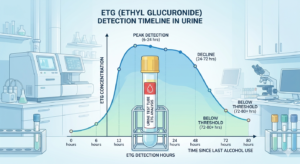
ETG stands for Ethyl Glucuronide, a direct metabolite produced when your liver breaks down ethanol (alcohol). Unlike blood alcohol content (BAC), which disappears within hours, ETG can remain detectable in urine for a significantly longer period — often up to 80 hours depending on several factors.
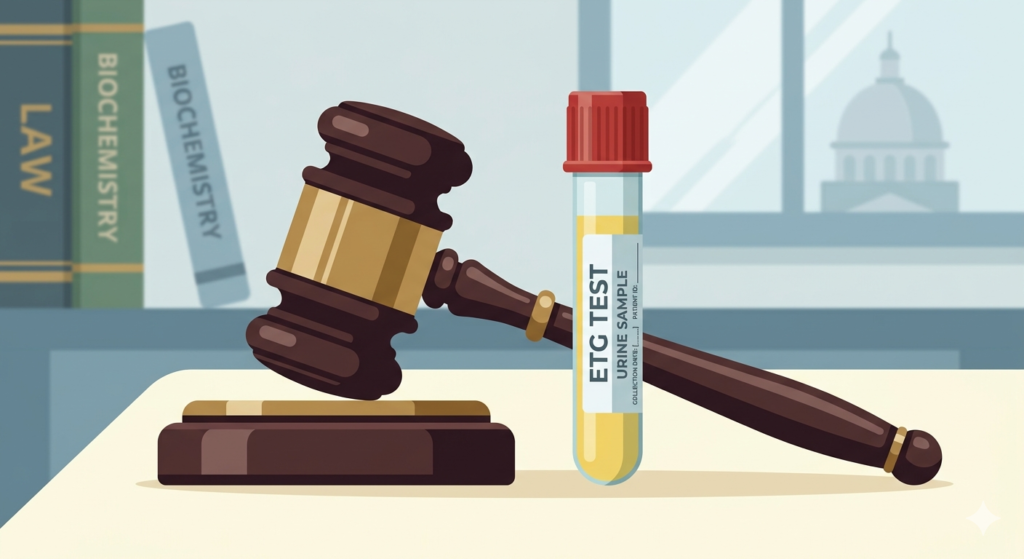
ETG is considered a biomarker of alcohol consumption, which means its presence in your urine is reliable evidence that you consumed alcohol, even when BAC has returned to zero. This is why ETG urine testing is widely used in:
- Probation and parole monitoring
- Court-ordered alcohol programs
- Workplace alcohol testing
- Addiction recovery programs
- Child custody and family court cases
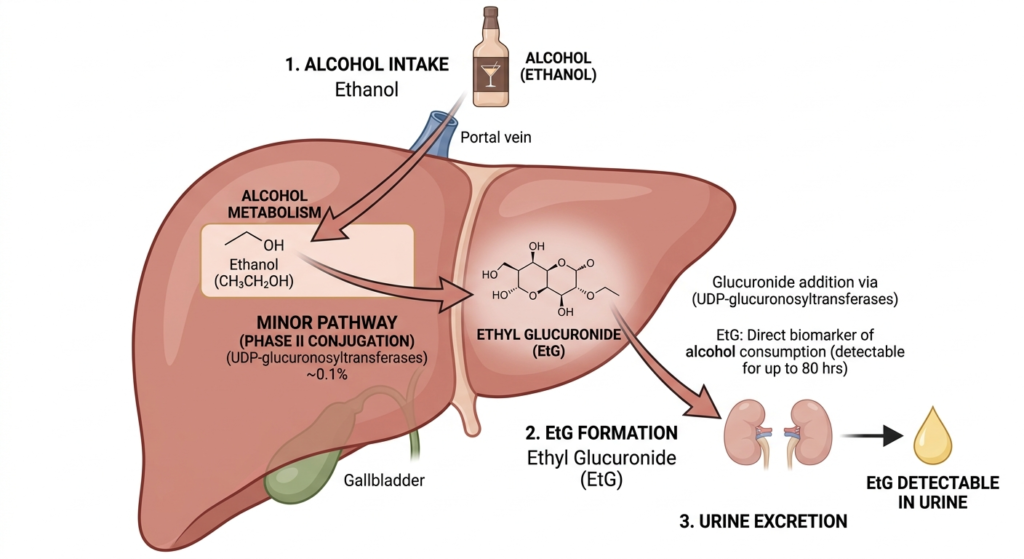
What Is an ETG Calculator?
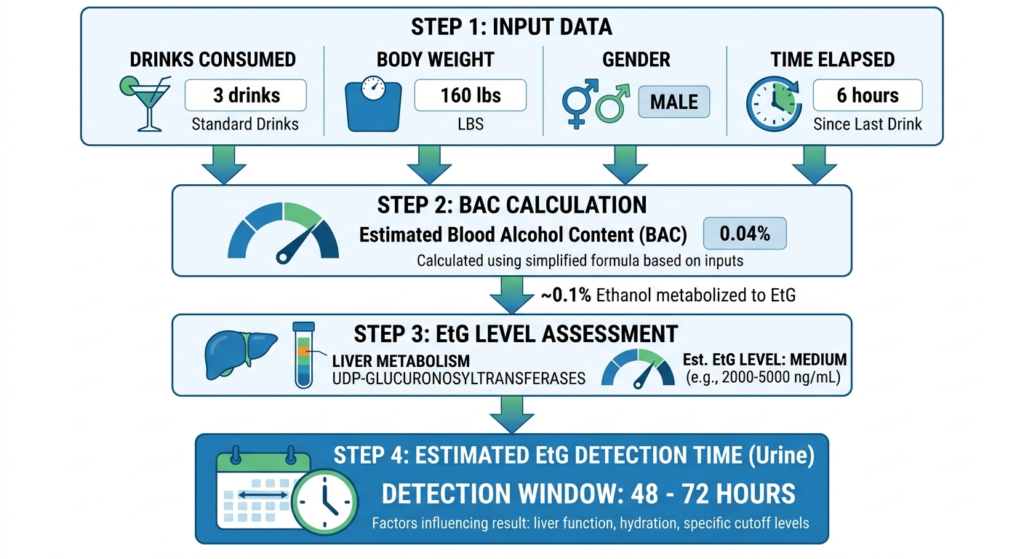
An ETG calculator is an online tool that estimates how long ethyl glucuronide (ETG) will remain detectable in your urine based on several personal inputs. It uses simplified biochemical formulas to model alcohol metabolism and ETG elimination.
Typical inputs include:
- Number of standard drinks consumed
- Body weight (in pounds or kilograms)
- Biological sex (male or female)
- Hours since your last drink
- ETG cutoff threshold (100, 200, or 500 ng/mL)
The output typically shows:
- Estimated current ETG level (in ng/mL)
- Whether ETG is still detectable at your selected cutoff
- Approximate hours until ETG falls below the detection threshold
⚠️ Important Disclaimer: ETG calculators provide estimates only. They are not medically or legally accurate tools and should not be used to make legal decisions. Always consult a qualified professional.
How Does an ETG Calculator Work? (Step-by-Step)
Understanding the science behind the calculator helps you use it more effectively.
Step 1 — Alcohol Intake Calculation
Each standard drink contains approximately 14 grams of pure alcohol. The calculator multiplies your drink count by this figure to get total alcohol consumed.
Step 2 — BAC Estimation Using the Widmark Formula
The calculator uses the Widmark formula to estimate your peak Blood Alcohol Concentration:
BAC = (Grams of Alcohol ÷ (Body Weight in grams × r)) × 100Where r is a gender-specific constant — approximately 0.68 for males and 0.55 for females — reflecting the difference in body water content between biological sexes.
Step 3 — Peak ETG Estimation
Peak ETG in urine roughly correlates to BAC. A common model estimates peak ETG at approximately 10,000 ng/mL per 0.1% BAC, though this varies significantly between individuals.
Step 4 — ETG Elimination Rate
ETG is cleared from the body at a relatively consistent rate — typically between 100 and 200 ng/mL per hour after peaking. Most calculators use an average elimination rate of around 150 ng/mL per hour.
Step 5 — Detection Time Output
The calculator checks how many hours it will take for your estimated ETG level to fall below the selected cutoff (e.g., 500 ng/mL). The formula:
Time to Clear = (Peak ETG − Cutoff Level) ÷ Elimination RateExample Calculation:
A 150 lb woman drinks 3 standard drinks. Five hours have passed since her last drink.
- Total alcohol = 42 grams
- BAC ≈ 0.11%
- Peak ETG ≈ 1,100 ng/mL
- After 5 hours: 1,100 − (150 × 5) = 350 ng/mL
- At a 500 ng/mL cutoff: already below — test likely negative
- At a 100 ng/mL cutoff: still detectable — clears in ~1.7 more hours
ETG Cutoff Levels Explained: 100, 200, and 500 ng/mL
ETG tests are not all equal. The sensitivity of the test is defined by its cutoff threshold, which determines the minimum concentration of ETG required to trigger a positive result.
| Cutoff Level | Sensitivity | Typical Use Case |
|---|---|---|
| 100 ng/mL | Very High | Court monitoring, zero-tolerance probation |
| 200 ng/mL | High | Alcohol treatment programs |
| 500 ng/mL | Standard | Workplace testing, clinical programs |
The lower the cutoff, the longer ETG remains “detectable” — meaning a 100 ng/mL test can flag alcohol consumption from up to 80 hours ago, while a 500 ng/mL cutoff may only catch consumption from the past 24–48 hours.
Many probation officers and courts use the 100 ng/mL threshold, which is why people subject to legal monitoring need to understand this nuance carefully.
How Long Is ETG Detectable in Urine?
This is the most common question surrounding ETG testing. The answer depends on several variables:
General detection windows (estimates):
- 1–2 standard drinks: ETG typically clears within 24–36 hours at a 500 ng/mL cutoff
- 3–5 standard drinks: Detection possible up to 48–60 hours at 100 ng/mL
- Heavy drinking (6+ drinks): ETG can persist for 72–80 hours at 100 ng/mL
These figures represent averages. Individual metabolism varies significantly based on factors covered in the next section.
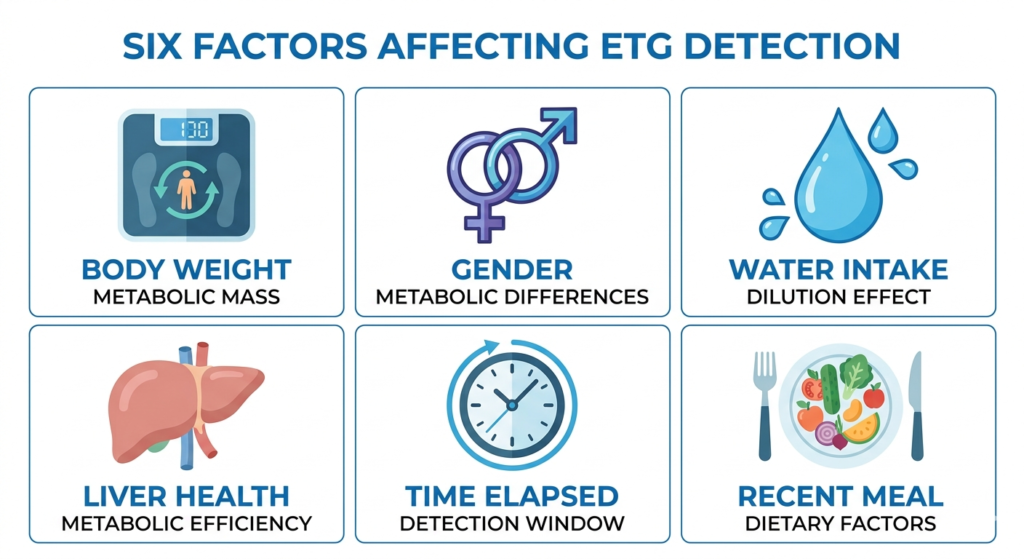
6 Key Factors That Affect ETG Detection Time
1. Body Weight
Heavier individuals have more body mass over which alcohol is distributed, generally resulting in lower peak BAC and lower peak ETG for the same number of drinks.
2. Biological Sex
Women have a lower percentage of body water than men (approximately 55% vs 68%), which means alcohol concentrates more quickly in women’s systems, typically producing higher ETG levels.
3. Hydration Level
Staying well-hydrated can dilute urine, which may reduce the ng/mL concentration of ETG — however, labs often check for diluted samples and may require a re-test.
4. Liver Health and Metabolism
Individuals with faster metabolisms or healthier liver function tend to process and eliminate ETG more quickly than average.
5. Food Consumption
Drinking on a full stomach slows alcohol absorption, which may slightly reduce peak ETG levels.
6. Drinking Pattern
Binge drinking (consuming drinks rapidly) creates higher peak BAC and therefore higher peak ETG than spreading the same number of drinks over many hours.
ETG Test and Probation: What You Need to Know
ETG urine tests are increasingly common in the U.S. justice system, particularly for individuals on probation or parole for alcohol-related offenses such as DWI/DUI, domestic violence, or other alcohol-related crimes.
Courts that require abstinence as a condition of probation often mandate ETG testing because:
- It detects alcohol consumption beyond the window of traditional breathalyzers
- It cannot be “beaten” by simply waiting a few hours
- A 100 ng/mL threshold creates a near-zero-tolerance environment
Common scenarios where ETG testing is mandated:
- DUI/DWI probation
- Drug court programs requiring alcohol abstinence
- Child protective services monitoring
- Professional license monitoring (e.g., pilots, healthcare workers, attorneys)
If you are subject to ETG testing as a condition of your probation or legal agreement, the only reliable way to pass is complete abstinence from alcohol. No supplement, detox product, or hydration strategy is proven to reliably accelerate ETG clearance beyond the body’s natural rate.
Limitations of ETG Calculators
While ETG calculators are useful educational tools, they have significant limitations:
- They use population averages for elimination rates, not your individual metabolism
- They cannot account for liver conditions, medications, or genetic variations
- They do not factor in non-beverage alcohol exposure (mouthwash, hand sanitizer, certain foods)
- Laboratory results can vary depending on the testing method and the specific lab
- Some foods and products — including certain protein bars, vanilla extract, and kombucha — have been shown to produce low-level positive ETG results
Always treat ETG calculator results as general estimates, not guarantees.
Part 2: Percentage Calculator — Complete Guide
What Is a Percentage Calculator?
A percentage calculator is a tool that computes percentage-based math quickly and accurately. Percentages appear constantly in daily life — from calculating discounts and tips to understanding test scores, tax rates, and financial returns.
A good percentage calculator can solve multiple types of percentage problems in seconds, eliminating manual calculation errors.
The 3 Core Percentage Formulas Everyone Should Know
Formula 1 — What is X% of Y?
Used for: Finding a percentage of a number (e.g., “What is 20% of 350?”)
Result = (Percentage ÷ 100) × Total Value
Example: (20 ÷ 100) × 350 = 70
Formula 2 — X is what percent of Y?
Used for: Finding what percentage one number is of another (e.g., “45 is what percent of 180?”)
Percentage = (Part ÷ Whole) × 100
Example: (45 ÷ 180) × 100 = 25%
Formula 3 — Percentage Increase or Decrease
Used for: Comparing change over time (e.g., prices, scores, data)
% Change = ((New Value − Old Value) ÷ Old Value) × 100
Example: (250 − 200) ÷ 200 × 100 = 25% increase
Real-World Uses of a Percentage Calculator
Shopping & Discounts
If an item costs $120 and is 35% off, the discount amount is: (35 ÷ 100) × 120 = $42 off, making the final price $78.
Restaurant Tips
A 18% tip on a $65 bill: (18 ÷ 100) × 65 = $11.70.
Test Scores & Grades
If you answered 47 out of 60 questions correctly: (47 ÷ 60) × 100 = 78.3%.
Tax Calculations
To calculate 8.5% sales tax on a $200 purchase: (8.5 ÷ 100) × 200 = $17 in tax.
Salary Raise
If your salary goes from $55,000 to $62,000: ((62,000 − 55,000) ÷ 55,000) × 100 = 12.7% raise.
Investment Returns
If your portfolio grew from $10,000 to $13,500: ((13,500 − 10,000) ÷ 10,000) × 100 = 35% return.
Percentage Calculator vs. ETG Calculator: The Connection
Both the ETG calculator and percentage calculator are fundamentally utility tools that handle complex math on behalf of users who need fast, reliable answers without doing manual calculations. Online calculator websites that offer both under one roof serve a diverse audience — from students and professionals to individuals navigating legal situations.
Many top-ranking calculator websites succeed by offering multiple calculator types in a single intuitive interface. If you run a calculator website, offering both ETG and percentage calculators increases your site’s topical authority, improves dwell time, and attracts a wider range of search queries. Learn More
Tips for Using Percentage Calculators Accurately
- Always identify which value is the “whole” — percentage calculations fail when the base number is confused with the part
- Double-check percentage vs. decimal input — some calculators require 0.20 for 20%, others accept 20
- Use percentage change, not absolute difference — for meaningful comparisons (e.g., growth rates)
- For VAT/tax calculations, remember to add the tax to the base price to find the total cost
- For reverse percentage (finding original price before a discount), use: Original = Final ÷ (1 − Discount Rate)
Frequently Asked Questions (FAQ)
Q: How accurate is an ETG calculator?
A: ETG calculators provide estimates based on population averages. Individual results can vary by 20–40% depending on metabolism, hydration, liver function, and other factors. They should be treated as rough guides, not medical determinations.
Q: Can I pass a 100 ng/mL ETG test after 48 hours?
A: It depends on how much you drank. For light consumption (1–2 drinks), 48 hours is generally sufficient. For heavy consumption (6+ drinks), ETG may still be detectable at 100 ng/mL after 48 hours.
Q: Does mouthwash show up on an ETG test?
A: Yes, alcohol-containing mouthwash (many brands contain 10–27% alcohol) can produce a positive ETG result, particularly at the 100 ng/mL threshold. Use alcohol-free mouthwash if you are subject to ETG testing.
Q: Can drinking water help pass an ETG test?
A: Hydration can dilute urine concentration, but labs test for diluted samples. Drinking excessive water to dilute a sample may result in an inconclusive result and a required retest. It does not remove ETG from the body faster.
Q: What is the difference between 20% of 80 and 80% of 20?
A: They are equal. 20% of 80 = 16, and 80% of 20 = 16. This is a useful mathematical symmetry: X% of Y always equals Y% of X.
Q: How do I calculate a percentage decrease?
A: Use the formula: ((Old Value − New Value) ÷ Old Value) × 100. For example, a price drop from $500 to $400: ((500 − 400) ÷ 500) × 100 = 20% decrease.
Q: Is the ETG test used for probation in all U.S. states?
A: ETG testing is used across all 50 states, but the frequency and threshold levels vary by jurisdiction, judge, and type of probation. Always confirm the specific testing requirements with your probation officer or attorney.

Conclusion
Both the ETG calculator and percentage calculator fill a real need: they take complex math — whether biochemical or arithmetic — and make it accessible to anyone in seconds.
For individuals navigating alcohol monitoring, the ETG calculator is an important educational resource for understanding how alcohol metabolism works and what to expect from a urine test. For students, shoppers, business professionals, and anyone who works with numbers daily, the percentage calculator is an indispensable everyday tool.
The best calculator websites serve users by combining accuracy, simplicity, and depth of explanation — exactly what this guide aims to provide.