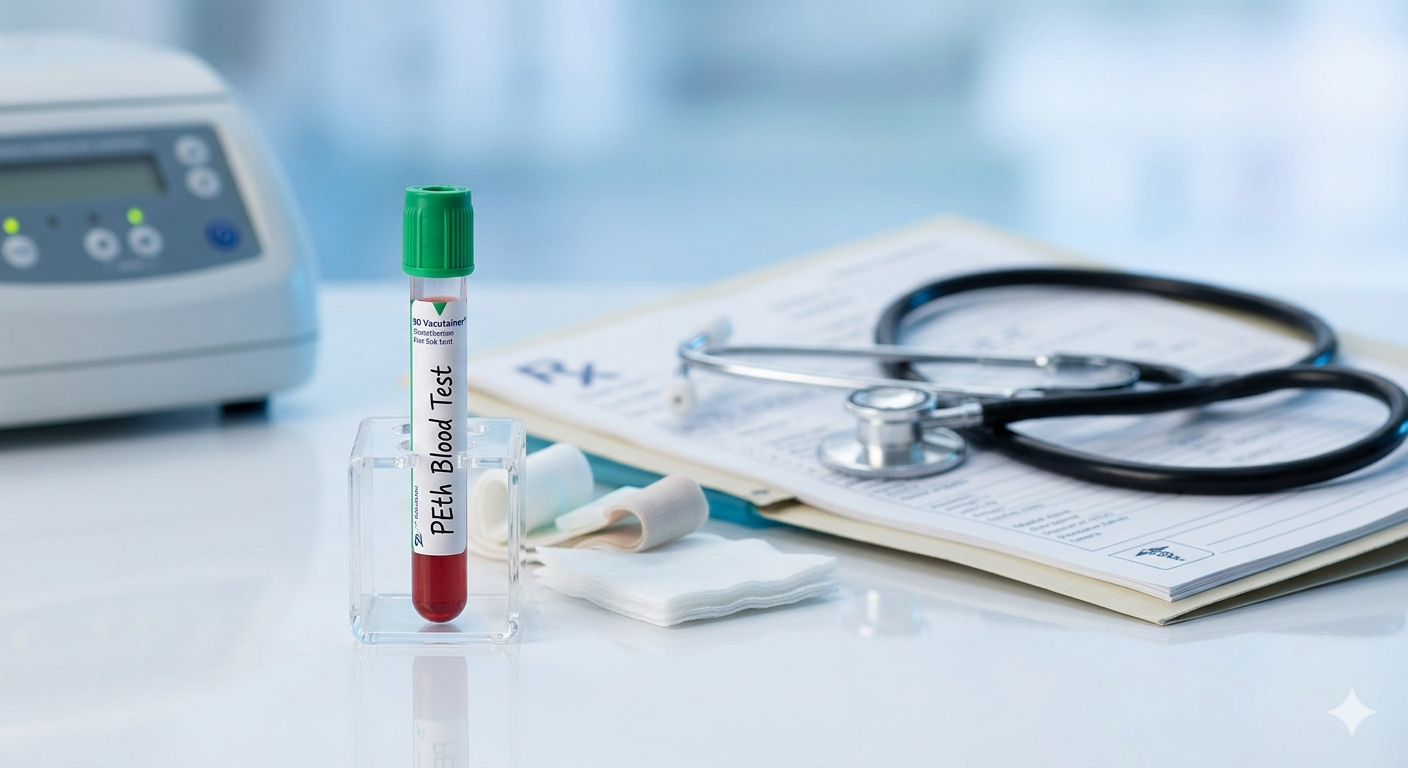
Whether you are a physician monitoring a patient with alcohol use disorder, an employer conducting workplace compliance testing, or someone preparing for a court-ordered sobriety evaluation, the PEth Test for Alcohol is one of the most accurate and reliable tools available today. Unlike breathalyzers that only detect alcohol consumed in the last few hours, or urine EtG tests that measure a metabolite, PEth is a direct biological marker of alcohol intake that stays measurable in your blood for up to four weeks.
In this comprehensive guide, we explain exactly what the PEth Test for Alcohol is, how it works at a molecular level, what your results mean, how long alcohol is detectable, and when this test is — and isn’t — the right choice.
What Is the PEth Test for Alcohol?
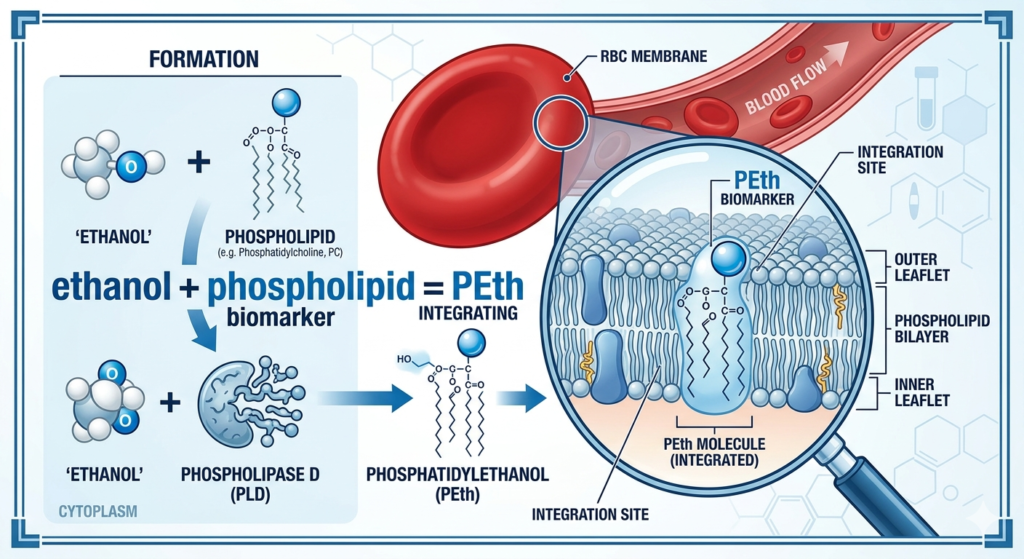
Phosphatidylethanol (PEth) is an abnormal phospholipid that forms in the membranes of red blood cells when a person consumes ethanol (alcohol). PEth does not exist naturally in the human body — it is produced exclusively in the presence of alcohol, which makes it a direct biomarker rather than an indirect metabolite like EtG (ethyl glucuronide) or CDT (carbohydrate-deficient transferrin).
The test measures the concentration of PEth-16:0/18:1 (the most clinically relevant homolog) in whole blood, typically expressed in nanograms per milliliter (ng/mL). Because PEth is embedded in the red blood cell membrane, it accumulates with repeated alcohol use and has a much longer detection window than traditional alcohol tests.
Key Scientific Facts About PEth
- PEth is formed by the enzyme phospholipase D, which catalyzes the transphosphatidylation reaction between ethanol and phosphatidylcholine in red blood cell membranes.
- It is only produced in the presence of ethanol — no other substance triggers its formation, making false positives essentially impossible.
- The biological half-life of PEth averages 4 to 5 days, with clinical studies reporting a range of 3 to 10 days depending on individual metabolism and liver function.
- PEth can be detected in whole blood for up to 28 days after the last drink in heavy or chronic drinkers.
📚 External Resource: American Family Physician — Phosphatidylethanol Test for Identifying Harmful Alcohol Consumption (2023) — A peer-reviewed clinical summary with accuracy data and biomarker thresholds.
🧪 PEth Test Calculator
Estimate how long PEth stays detectable in your blood
⚠️ This calculator is for informational purposes only. Always consult a licensed medical professional for clinical decisions.
| PEth Level | Interpretation | Detection Window |
|---|---|---|
| < 20 ng/mL | Negative / Abstinence | N/A |
| 20–199 ng/mL | Moderate Drinking | Up to 14 days |
| > 200 ng/mL | Heavy / Chronic Use | Up to 28 days |
How the PEth Test for Alcohol Works: The Testing Process Step by Step
Understanding what to expect during the testing process helps reduce anxiety and ensures accurate results. Here is what happens from sample collection to your report.
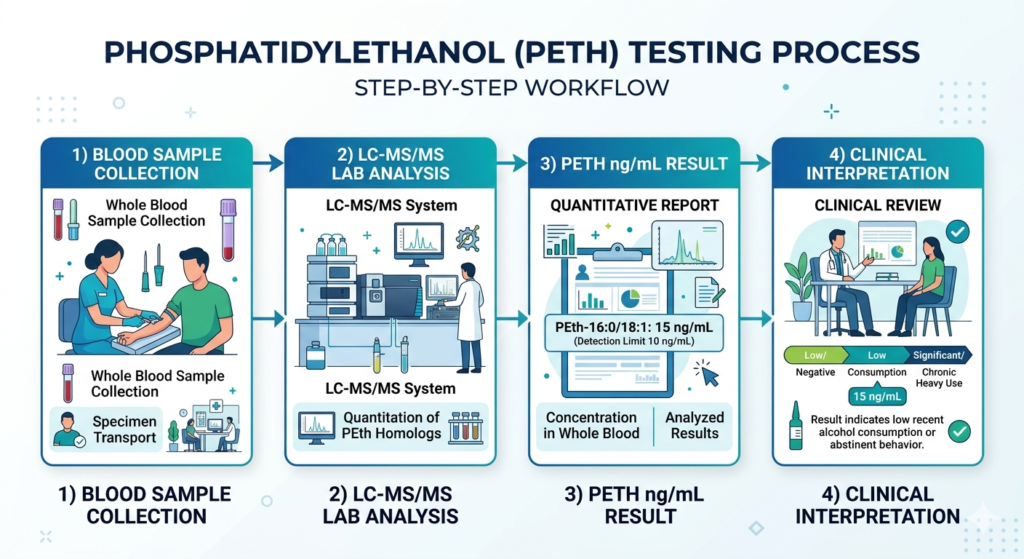
Step 1: Blood Sample Collection
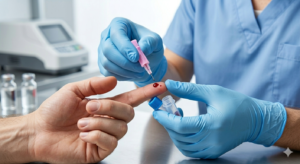
The PEth test is performed on whole blood, collected either via venipuncture (a standard blood draw from the arm) or via a dried blood spot (DBS) finger-prick method. Both collection methods are equally accurate, which makes the DBS option particularly convenient for remote testing, home collection kits, or low-resource settings. The CPT billing code for PEth testing in the United States is 80321.
Step 2: Laboratory Analysis
The blood sample is processed using liquid chromatography–tandem mass spectrometry (LC-MS/MS), which is considered the gold standard analytical method for PEth quantification. This technique is highly sensitive and specific, capable of detecting PEth at concentrations as low as 3–4 ng/mL.
Step 3: Results Interpretation
Results are reported in ng/mL and interpreted against established clinical thresholds (see the levels table in the next section). Most commercial laboratories return results within 3 to 7 business days.
PEth Levels Chart: What Do Your Results Mean?
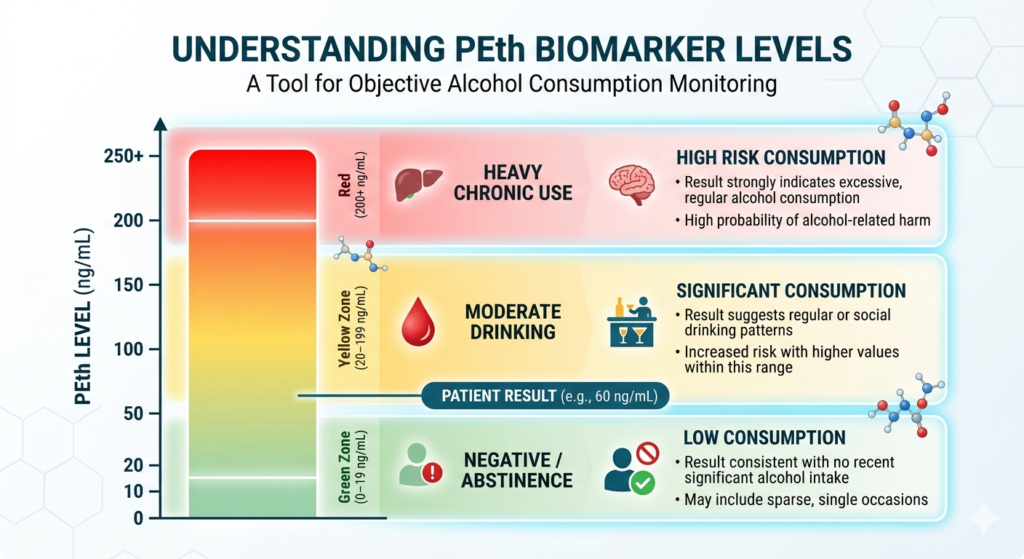
The most important question anyone receiving a PEth result asks is: what does my number mean? The table below presents the clinically accepted thresholds used by medical boards, forensic labs, and workplace testing programs worldwide.
| PEth Level (ng/mL) | Interpretation | Clinical Significance | Typical Detection Window |
|---|---|---|---|
| < 8 ng/mL | Below quantification limit | Effectively negative; consistent with complete abstinence | N/A |
| 8 – 19 ng/mL | Low / Trace | Possible very occasional light drinking or abstinence period ending | 1–7 days |
| 20 – 199 ng/mL | Moderate Drinking | Indicates meaningful alcohol consumption in past 2–3 weeks | Up to 14 days |
| > 200 ng/mL | Heavy / Chronic Use | Consistent with daily heavy drinking or recent heavy binge episodes | Up to 28 days |
The widely adopted clinical cut-off for identifying moderate to heavy alcohol consumption is 20 ng/mL. A result at or above this threshold is considered a positive indicator of significant recent alcohol use. This is the threshold referenced by the American Psychiatric Association (APA) in its guidelines for monitoring patients with Alcohol Use Disorder (AUD).
PEth Detection Window: How Long Does It Stay in Your System?
One of the most frequently searched questions about the PEth test is: ‘How long does PEth stay detectable?’ The answer depends on several key factors.
Factors That Affect PEth Detection Time
- Drinking pattern and frequency: Chronic heavy drinkers have the longest detection windows — up to 28 days. A single binge episode may produce detectable levels within 8–24 hours, but those levels fall below the 20 ng/mL threshold in approximately 7–12 days for most individuals.
- Half-life dynamics: PEth follows first-order elimination kinetics. With an average half-life of 4.5 days, starting from a heavy-use level of 200 ng/mL: Day 4.5 → ~100 ng/mL | Day 9 → ~50 ng/mL | Day 13.5 → ~25 ng/mL | Day 18 → ~12.5 ng/mL (below the 20 ng/mL threshold).
- Body Mass Index (BMI): Studies show that individuals with a BMI ≥ 30 kg/m² have lower odds of detectable PEth levels (Odds Ratio = 0.44), which may reflect differences in red blood cell volume distribution.
- Liver function: Advanced hepatic fibrosis increases the probability of detectable PEth levels (Odds Ratio = 1.83), likely due to impaired lipid metabolism.
- Hemoglobin levels: Normal or elevated hemoglobin correlates with a higher probability of detectable PEth (Odds Ratio = 2.19).
Can You Speed Up PEth Elimination?
No. Because PEth is embedded in the phospholipid membrane of red blood cells — which have a lifespan of approximately 120 days — it cannot be flushed out through hydration, exercise, diuretics, or detox supplements. The only factor that reduces PEth is time and abstinence from alcohol.
PEth Test Accuracy: How Reliable Is It?
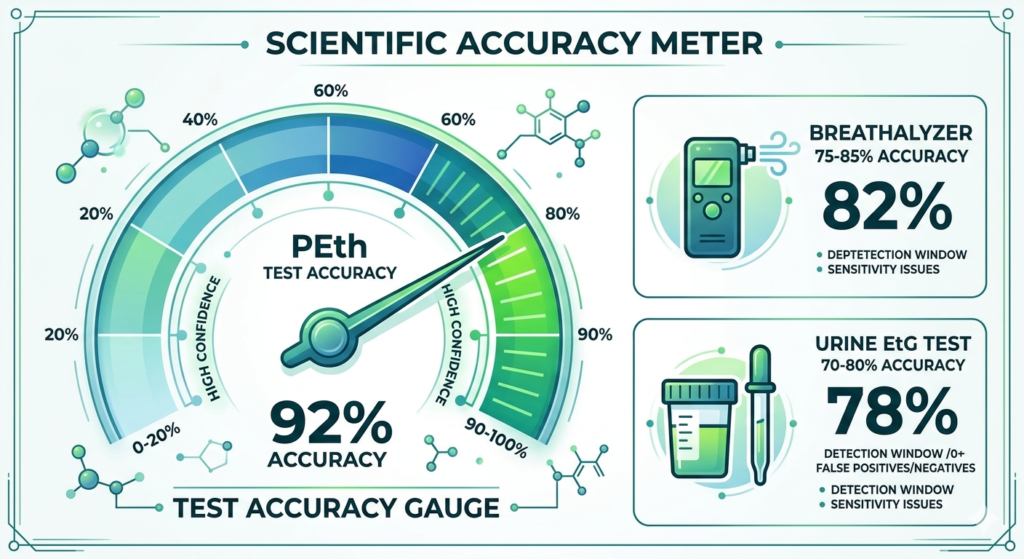
The PEth test is widely considered the gold standard for detecting moderate to heavy alcohol use over a multi-week period. Here is a summary of key accuracy data from peer-reviewed research:
- In a prospective randomized study of 44 healthy adults, the area under the receiver operating characteristic (AUROC) curve for PEth was 0.92 (95% CI, 0.82–1.0), demonstrating very high accuracy for distinguishing abstention from moderate alcohol consumption.
- A cross-sectional study of 238 adult trauma patients found an AUROC of 0.791 for detecting alcohol misuse and 0.885 for detecting severe misuse, compared against the AUDIT-C questionnaire.
- A meta-analysis of 21 studies (n = 3,085) found that 82% of individuals with positive AUDIT-C scores (indicating problematic drinking) had detectable PEth levels ≥ 8 ng/mL.
- Specificity is near-perfect: PEth is not triggered by incidental exposures like mouthwash, hand sanitizer, or fermented foods — unlike EtG urine tests, which are prone to such false positives.
Limitations of the PEth Test
- PEth cannot determine exactly how much alcohol was consumed or on which specific days.
- It cannot reliably distinguish complete abstinence from very light, occasional drinking at low-level results (8–19 ng/mL range).
- Accuracy may be affected by BMI, hemoglobin levels, and liver health (as noted above).
- There are no universal consensus clinical guidelines for PEth in all settings — interpretation should always involve a qualified clinician.
PEth vs. Other Alcohol Tests: A Side-by-Side Comparison
| Test Type | Sample | Detection Window | Detects | False Positive Risk | Cost (USD) |
|---|---|---|---|---|---|
| PEth Blood Test | Whole blood | Up to 28 days | Moderate to heavy use | Extremely low | ~$150 |
| EtG Urine Test | Urine | 24–72 hours | Any alcohol use | Moderate (hand sanitizer, etc.) | ~$30–$60 |
| CDT Blood Test | Blood serum | 2–4 weeks | Chronic heavy use only | Low | ~$80–$120 |
| Breathalyzer | Breath | Hours only | Current intoxication | Low | <$10 |
| Hair Alcohol Test | Hair | Up to 90 days | Chronic use over months | Low to moderate | ~$200–$400 |
📚 External Resource: Randox Testing Services — Introduction to PEth Alcohol Testing — An industry overview of PEth in workplace and medico-legal contexts.
Who Needs a PEth Test for Alcohol? Common Use Cases
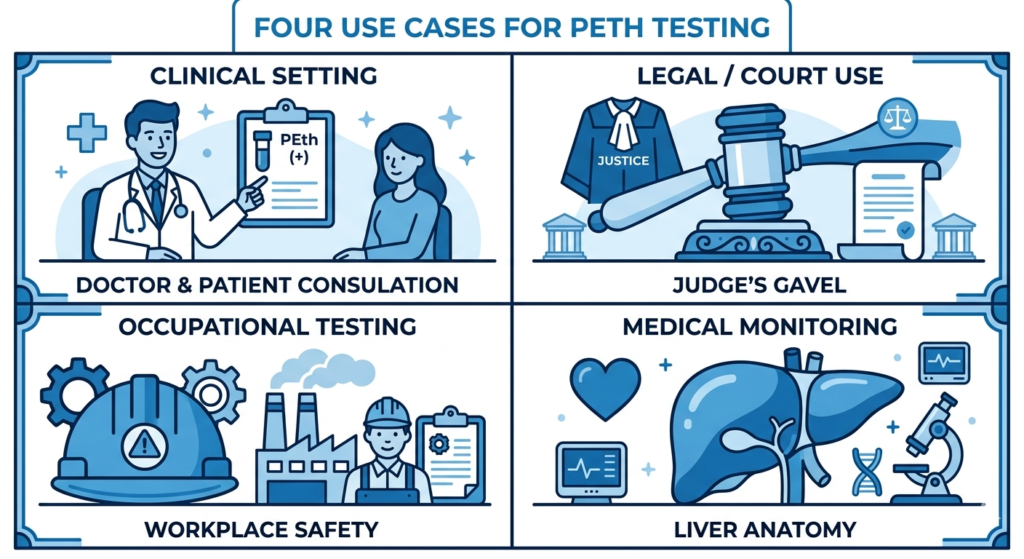
1. Clinical Monitoring of Alcohol Use Disorder (AUD)
The American Psychiatric Association recommends PEth testing as part of the initial evaluation or ongoing monitoring for patients with Alcohol Use Disorder. It offers an objective, self-report-resistant measure that can complement validated questionnaires like the AUDIT-C, especially in cases where patients tend to underreport their alcohol consumption.
2. Medico-Legal and Family Court Proceedings
PEth is increasingly used in family law courts, custody disputes, DUI monitoring programs, and probation supervision. Its long detection window and near-zero false positive rate make it far more defensible in legal settings than shorter-window tests. Results from accredited labs carry significant evidentiary weight.
3. Workplace and Occupational Health Testing
High-risk industries — including aviation, maritime, rail, oil and gas, and construction — use PEth as part of return-to-work programs and pre-employment screening to verify abstinence claims over a meaningful period. Unlike breathalyzers, which only detect current intoxication, PEth provides a 28-day behavioral picture.
4. Liver Disease and Transplant Evaluation
Hepatologists and transplant teams use PEth to assess alcohol consumption in patients with liver disease. Because alcohol use can contraindicate organ transplantation and accelerate liver damage, objective biomarker data is essential for clinical decision-making.
5. Personal Health Monitoring
Individuals who want an objective measure of their own drinking patterns — or who are in early recovery and want biological confirmation of their sobriety progress — can request PEth testing voluntarily through private labs or direct-to-consumer testing services.
PEth Test for Alcohol Cost and How to Get Tested
How Much Does a PEth Test Cost?
The PEth Test for Alcohol costs approximately $150 USD in the United States, though prices vary by region, provider, and whether the test is ordered by a physician or accessed through a direct-to-consumer lab service. Notable providers include Quest Diagnostics (CPT code 80321), LabCorp, and RequestATest for self-pay options.
Insurance coverage depends on the clinical indication. Medicare may require an Advance Beneficiary Notice of Noncoverage (ABN) before the test is administered. Medico-legal ordered tests are typically self-pay.
How to Order a PEth Test for Alcohol
- Through your physician or psychiatrist (most common for clinical purposes)
- Via direct-to-consumer lab services (such as RequestATest or LabCorp) without a doctor’s referral
- Through a certified medico-legal testing provider for court-ordered or occupational purposes
- Via a dried blood spot (DBS) home collection kit — available through select specialist providers
📚 External Resource: LabCorp — Phosphatidylethanol (PEth) Test Information
PEth Test FAQ: Frequently Asked Questions
A single standard drink is very unlikely to produce a positive PEth result above the 20 ng/mL threshold. However, a single heavy binge episode (5 or more drinks) can elevate PEth above the cutoff within 8–24 hours of consumption. Light, incidental drinking may produce trace levels (8–19 ng/mL) but rarely exceeds the clinical positive threshold in people who only drink occasionally.
Research consistently shows that self-reported alcohol consumption significantly underestimates actual intake in clinical and legal settings. The PEth test provides an objective, biologically-verified measure that is far more reliable than recall-based questionnaires. A large meta-analysis found that 82% of patients who reported problematic drinking had detectable PEth levels, validating its sensitivity as a corroborative tool.
Virtually no. Unlike EtG urine tests, which can turn positive after exposure to hand sanitizers, mouthwash, or cleaning products, PEth is exclusively produced by the enzymatic reaction between alcohol and red blood cell phospholipids. Accidental or environmental exposure to ethanol does not trigger PEth formation. This makes PEth one of the most specific alcohol biomarkers available.
The quantities of ethanol found in medications (cough syrups, tinctures) or fermented foods are generally not sufficient to produce clinically significant PEth elevations. However, regular consumption of high-alcohol-content products in therapeutic or nutritional contexts should be disclosed to the ordering clinician.
No. PEth is alcohol-specific. It does not detect any drugs or substances other than ethanol. For drug testing, separate biomarker panels (urine drug screens, hair drug tests, oral fluid tests) are used.
For moderate drinkers, PEth typically falls below the 20 ng/mL threshold within 7–14 days of abstinence. For heavy or chronic drinkers starting from very high levels (200+ ng/mL), the clearance period may extend to 21–28 days. Individual variation in metabolism, BMI, and liver health affects this timeline. Always consult a medical professional for personalized interpretation.
Conclusion: Is the PEth Test Right for You?
The PEth test for alcohol stands apart from all other alcohol testing methods in one critical way: it provides a direct, biologically incontrovertible record of alcohol exposure over the previous four weeks, with near-zero false positive risk and very high sensitivity for moderate to heavy consumption.
If you need to verify abstinence for legal, medical, or occupational reasons — or if you are a clinician seeking an objective corroboration of patient self-report — the PEth test is the most scientifically robust option currently available. Its limitations (inability to quantify exact amounts, potential sensitivity variation by BMI and liver status) are minor compared to its strengths.
Always work with a qualified clinician or accredited testing laboratory to ensure proper chain-of-custody procedures, accurate interpretation, and appropriate clinical context for your results.
Try Our More Tools.